Quiet Luxury Jewellery and the Houses Behind It
In quiet luxury jewellery, the stone speaks and the house whispers. What matters is the quality of the gem, the precision of the setting and the rarity of the material, far more than carat weight or a famous name. A modest sapphire of exceptional colour will hold the eye longer than a far larger stone chosen for size alone. The most discreet houses understand this, and their clients tend to stay with them for generations.
The new value equation
Fine jewellery has long been sold on size and signature. The quiet approach reverses both. It asks how a stone was cut and set, whether its colour is natural, and how the piece will feel after years of daily wear. Continuity becomes its own signal: a jeweller whose clients’ grandparents shopped in the same room carries an authority no campaign can manufacture.
The way jewellery is worn has changed too. Many women now buy fine jewellery for themselves, choosing pieces to wear every day rather than to keep for occasions. A jewel worn constantly needs comfort, durability and a design that rewards being seen at close quarters, again and again.
The quiet codes
The diamond drop
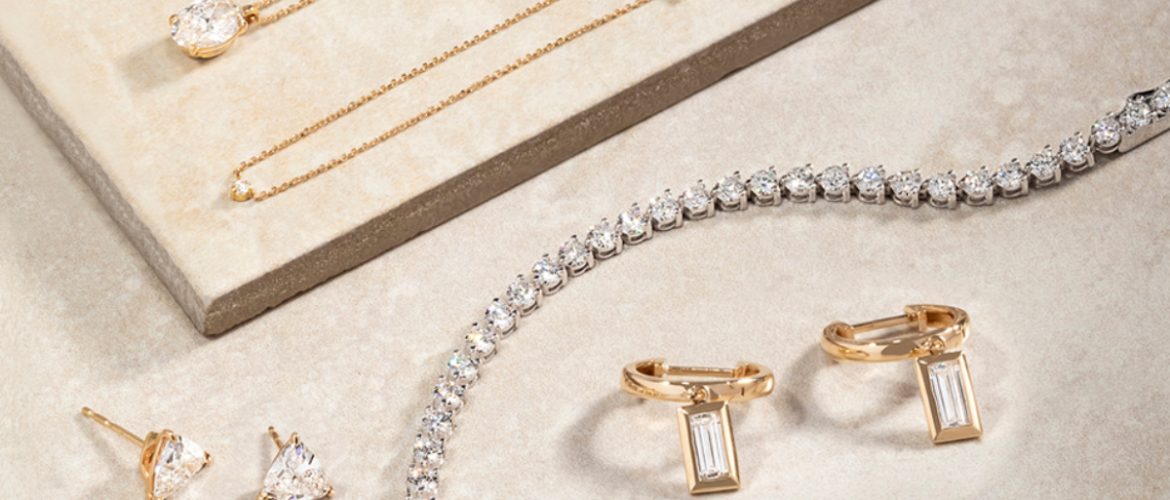
A simple diamond drop earring is one of the most versatile quiet jewels there is. It suits a summer terrace as easily as a formal dinner, and it works because it moves and catches the light without demanding attention. Shape matters more than size. Oval, pear and emerald-cut drops that hang lightly tend to look more considered than heavy statement pieces.
Geometry over the logo
Where much of the jewellery market leans on recognisable motifs, the quieter alternative lies in form: clean geometry, sculptural curves, a chain whose interest is in its construction. A piece that reads as design rather than branding will usually outlast the fashion for any particular signature.
The rare stone over the big stone
Colour, quality and rarity tend to matter more than mass. Several gems are prized by collectors for qualities that have little to do with size.
| Stone | What makes it distinctive | What collectors look for |
|---|---|---|
| Unheated sapphire | Colour that has not been enhanced by heat treatment | Even saturation, with the absence of heating disclosed and documented |
| Paraíba-type tourmaline | An intense neon blue to green produced by copper, found in Brazil, Mozambique and Nigeria | Vivid, glowing colour, often in smaller sizes |
| Mahenge spinel | Vivid pink to red spinel from Tanzania | Strong saturation without a brownish tint |
| Old-cut diamond | Hand-cut facets with a softer, more romantic light | Pleasing proportions and a warm, broad flash |
A well-saturated smaller stone is often more satisfying to own than a larger one of mediocre colour. For significant coloured stones, a report from a respected independent laboratory is valuable, though it describes a stone rather than guaranteeing its quality or value. Disclosure of any treatment is essential. Geographic origin can matter, though it cannot always be determined with certainty. The name Paraíba itself refers to the colour and chemistry of copper-bearing tourmaline as well as to its Brazilian origin.
Pieces that work together
Jewellery worn every day is rarely worn alone. A fine chain, a slim cuff and a single stone-set piece can sit together comfortably if they share a sense of proportion, and slight variations in texture or tone keep the combination from looking bought in one afternoon.
Distinctive rather than conspicuous
Quiet jewellery is not necessarily small. A vivid coloured stone or a bold sculptural gold form can be every bit as quiet as a fine chain, because what makes jewellery quiet is the absence of conspicuous branding rather than the absence of presence. The test is whether a piece draws attention to its design and materials or to its maker’s name.
Understatement also carries a risk. Jewellery so restrained that it vanishes gives its wearer little pleasure. A diamond drop works because it catches light and moves, and a sculpted curve works because it invites touch. A quiet piece should reward a second glance rather than require one.
The houses worth knowing
The jewellers below range from centuries-old family houses to a contemporary studio in Mumbai. Each is known above all for the quality and character of its work. JAR and Hemmerle, two of the most private names in jewellery, appear in our guide to the quiet luxury brands worth knowing.
A.E. Köchert, Vienna
A.E. Köchert was founded in Vienna in 1814 and became Imperial and Royal Court Jeweller to the Habsburgs. Its defining commission came when Emperor Franz Joseph ordered a set of 27 diamond stars for Empress Elisabeth. She wore them woven into her hair, and they started a fashion for star jewels across Europe. The house still makes stars from the original nineteenth-century drawings, a rare case of a historic design passing directly from archive to workshop. Since 1873 it has occupied the same premises on Neuer Markt, and it is now run by the sixth generation of the family.
Mellerio, Paris
Mellerio traces its history to 1613 and is widely regarded as the oldest family-owned jewellery house in Europe. It has been based at 9 rue de la Paix, steps from Place Vendôme, since 1815, and its workshop still sits above the boutique. Over four centuries it has supplied royal and aristocratic families across Europe. Its most technical signature is its own diamond cut, the Mellerio, an oval-based cut of 57 facets developed by the house. It reflects a jeweller that has always thought as carefully about the stone as about the setting.
Vhernier, Milan
Vhernier began as a goldsmith’s workshop in Valenza in 1984 and is now headquartered in Milan. Its jewellery is sculptural, with smooth, mirror-polished volumes that look effortless and conceal considerable engineering. Forms swell and curve like small pieces of modern sculpture, and the house is known for pairing gold with unconventional materials such as titanium and ebony. Every piece is made by hand in Italy. Since 2024 it has belonged to Richemont, and the design language remains as distinctive as ever.
FOPE, Vicenza
FOPE was founded in Vicenza in 1929 by the goldsmith Umberto Cazzola and is still led by his family. Its signature is Flex’it, a patented system of tiny 18-carat gold springs hidden between the links of its gold mesh, which lets bracelets and rings stretch and move with the wearer. The principle dates back to the 1950s and was refined and patented as Flex’it in 2007. The appeal lies in the way the gold moves rather than in any decorative motif. It is everyday jewellery in the best sense, designed to be worn constantly and forgotten until someone asks about it.
Studio Renn, Mumbai
Studio Renn was founded in Mumbai in 2018 by Rahul and Roshni Jhaveri, and its first show was held in an art gallery rather than a jewellery salon. Rahul trained in his family’s diamond business, and the studio approaches jewellery as a form of contemporary art. It has set diamonds into acid-treated concrete and paired raw cast surfaces with polished gold. Its first concrete ring won the Best Innovative category at the Couture Design Awards in 2021. This is jewellery for the collector who values ideas as much as stones, and it shows that quiet luxury need not be conservative.
The LXRY view
The jewels that endure are rarely the largest or the most heavily branded. They are the ones chosen for the quality of a stone, the integrity of a setting and the skill of the hands that made them. In jewellery the quietest pieces are often the ones handed down, because they were bought to be worn for a lifetime and loved for longer.
Frequently asked questions
What is quiet luxury jewellery?
Quiet luxury jewellery prioritises the quality of the stone, the craftsmanship of the setting and distinctive design over carat weight and conspicuous branding. It can be bold or delicate, and it is usually made to be worn every day.
Which jewellery houses are associated with quiet luxury?
Houses often cited include A.E. Köchert in Vienna, Mellerio in Paris, Vhernier in Milan, FOPE in Vicenza and Studio Renn in Mumbai. JAR in Paris and Hemmerle in Munich are also among the most discreet names in fine jewellery.
What are the best stones for quiet luxury jewellery?
Collectors often favour stones valued for colour and rarity rather than size, such as unheated sapphires, copper-bearing Paraíba-type tourmalines, Mahenge spinels and antique old-cut diamonds. Full disclosure of any treatment matters for every coloured stone.
Does a laboratory report guarantee a gemstone’s value?
No. A report from a respected independent laboratory describes a stone’s characteristics, such as treatment and sometimes origin, but it does not guarantee quality or value. Origin cannot always be determined with certainty.
Are diamond drop earrings quiet luxury?
A simple diamond drop is one of the most versatile quiet jewels. Elegant shapes such as ovals, pears and emerald cuts that hang lightly tend to look more refined than heavy statement designs.
Is quiet luxury jewellery a good investment?
Jewellery is best bought for the pleasure of wearing it. Value depends on many factors, including colour, treatment, origin, condition, provenance and demand, and no category of jewellery is guaranteed to appreciate.
EXPLORE LXRY
_____________
From exceptional travel and private experiences to fine watches, fashion, interiors and specialist services, LXRY connects readers with a carefully selected network of luxury businesses.
Many of the hotels and specialists we write about are ones we have known and worked with over the past decade. If something here has caught your interest, tell us what you have in mind and we will point you in the right direction.
Enquire Now
LXRY: Men | Women | Travel | Lifestyle | Partner Network