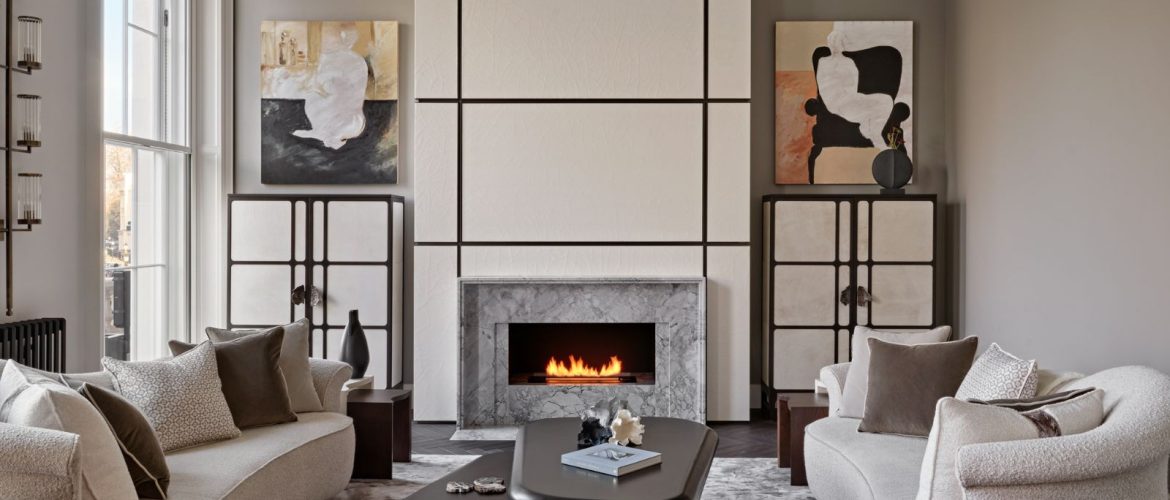
Quiet Luxury Interior Design: Rooms That Whisper
The quiet luxury room asks nothing of you. It doesn’t demand attention or performance, and it doesn’t need to impress anyone who walks in. Its luxury lies in ease: materials that feel right underfoot and in the hand, light that flatters at every hour, and nothing that competes for your attention when you would rather be resting. A room that impresses guests is easy to buy. A room that genuinely rests the people who live in it is far rarer.
Luxury as relief
Excess carries hidden costs. Objects accumulate, surfaces multiply and decisions pile up, and each adds a little to the mental load of a home. The quiet interior reduces that load by asking every element to justify its place.
Many European designers have long worked in this register, favouring matte finishes over gloss, tonal depth over contrast and softer stones over dramatic veining. Low reflectivity and fine detail do the work that spectacle might do elsewhere. The approach mirrors the principle LXRY explores in what quiet luxury actually means: value expressed through knowledge and quality rather than display.
A room that has evolved
People who have lived and travelled well have seen every marble lobby and statement chandelier the hotel world can offer. What cannot be bought off a showroom floor is a room that feels as though it has evolved over time, with pieces gathered, surfaces softened and a sense of history that reveals itself slowly.
To illustrate, imagine a London mews house that began as a pristine white shell and has been reworked with deep burgundies, blues and soft greens. Textured wall coverings, bespoke joinery and the glow of alabaster lighting complete it. Nothing in such a house announces itself at first glance. It unfolds gradually as you move through it, and that gradual reveal is what distinguishes a quiet interior from a merely tasteful one.
The quiet codes
Texture carries the interest
When the palette is restrained, something else has to hold the eye, and that something is texture. Plaster and limewash give walls a soft, shifting depth. Limestone, slatted timber, ribbed glass and tactile cabinetry surfaces add variety without noise. Two or three well-chosen contrasting textures tend to do more than a room full of materials competing for attention.
Materials that change with age
One of the clearest tests of a quiet interior is how it looks in ten years. Many mass-produced furnishings look their best on the day they are installed and decline from there. Quiet luxury tends to favour materials that acquire character with use. These are not necessarily low-maintenance materials, and some ask more of their owners than conventional finishes do. The real luxury lies in choosing materials whose way of ageing you genuinely appreciate.
| Material | How it ages | What it asks of you |
|---|---|---|
| Unlacquered brass | Develops a warm, living patina where hands touch it | Polishing if you prefer it bright, or acceptance of the patina if not |
| Solid oak | Deepens in colour and can usually be sanded and refinished | Care depends on the finish: oiled oak needs periodic re-oiling, lacquered oak much less |
| Natural stone | Some stones acquire a soft sheen with use | Appropriate sealing and care, since marble and limestone can stain or etch |
| Linen | Softens and relaxes with every wash | Gentle laundering and a tolerance for creases |
| Limewash and lime plaster | Gains a mellow, uneven depth | Occasional refreshing, and an eye for the difference between patina and damage |
Warm, layered neutrals
Warmer, more tonal palettes have largely replaced the stark white-on-white interior: warm greys, sand, oat, camel and ecru. Neutral need not mean beige. Some of the most interesting quiet rooms use soft olive, earthy pink, chocolate, caramel or muted mauve. The skill lies in creating dimension through closely related tones and varied surfaces, so the room feels rich rather than flat.
Light as architecture
Lighting is the element most often underestimated, and it is the one that separates a beautiful room from a merely attractive one. Everything else in the room is seen through it. Recessed ceiling lights used as the only source create a flat wash that eliminates shadow, and shadow is what gives a room depth.
| Layer | Purpose | Approach |
|---|---|---|
| Ambient | General illumination for the room | Soft, indirect sources such as wall lights, cove lighting or concealed strips |
| Task | Light for reading, cooking or working | Focused lamps and fittings placed exactly where needed |
| Accent | Highlighting art, texture or architecture | Discreet directional light that draws the eye to chosen details |
Warm colour temperatures of around 2700K to 3000K suit most living spaces, though preferences vary and kitchens or studies may call for something crisper. Independent dimming for each layer lets a room shift gracefully from morning to evening. A beautifully furnished room lit only from the ceiling will still feel clinical, whatever was spent on everything else.
The details you feel
Hardware
The things the hand touches dozens of times a day reveal the quality of a room more honestly than anything on display. A solid brass door handle, a forged iron latch or the smooth action of a well-engineered drawer runner registers physically, even when it is not consciously noticed. Few visitors will ever comment on it, which is exactly why it is such a satisfying place for a quiet budget to go.
Joinery
The depth of a shadow gap between a fitted wardrobe and a plaster wall, or the reveal on a panelled door, separates a room finished to a genuinely high standard from one that only aspires to it. When this work is done well it becomes invisible, and the room simply feels resolved.
Selection over accumulation
Art and objects in a quiet interior are chosen rather than amassed. Each piece earns its place through meaning, quality or the pleasure it gives, and nothing is there merely to fill a surface. A useful habit is to look at each room from the doorway every so often and ask what could be taken away.
Rooms for a private life
For many households, the questions asked of a home have changed. Alongside how many people a dining room can seat, clients may now ask where they will write, paint, play the piano or read late at night. A quiet luxury home makes room for those private pursuits, whether that means a small library, a music room or a place for restoration and rest. Designed well, these spaces follow the same codes as the rest of the house, with natural materials, soft light and nothing superfluous.
The makers worth knowing
Pinch, London
Pinch was founded in London in 2004 by the husband-and-wife team Russell Pinch and Oona Bannon, with the simple aim of making furniture and lighting they would want to live with themselves. Its pieces are made by hand and to order by a group of specialist workshops in the UK and Europe. The work is known for clean forms, beautiful timbers and finishes developed to let wood age gracefully. It is furniture designed to become part of a house rather than to dominate it.
Joseph Giles, West Sussex
Joseph Giles designs and makes architectural hardware for private residences and describes its products as made in Britain by skilled artisans. Its range runs from solid brass door pulls to lever handles sheathed in hand-stitched bridle leather. Its bespoke service creates one-off pieces in its own West Sussex workshop. This is the hardware the hand meets every day, and it rewards that daily contact in a way few other parts of a house can.
Atelier Alain Ellouz, Versailles
Atelier Alain Ellouz was founded in 2005 and works with alabaster and rock crystal from its workshop near Versailles, where pieces are carved and sculpted by hand. Alabaster is soft and fragile, which is one reason it has rarely been used on this scale. The atelier has developed its own techniques for backlighting the stone so that its natural veining glows. The result is light with the warmth of a material rather than a bulb, perhaps the clearest expression of light as architecture.
Colour, pattern and personality
Quiet luxury is often mistaken for minimalism, but a quiet room does not have to be sparse. It can hold strong colour, antique furniture, a wall of books or a bold painting, provided each element feels chosen and the room is allowed to breathe around it. Pattern can work too, especially in natural materials such as woven textiles, veined stone or the grain of timber. The measure is intention rather than quantity.
The LXRY view
The rooms people remember are rarely the most dramatic ones. They are the rooms where the light fell beautifully, the materials felt right and the details revealed themselves slowly. A quiet interior is ultimately a matter of judgement exercised many times over, in every surface, fitting and lamp, until the room no longer needs explaining.
Frequently asked questions
What is quiet luxury interior design?
Quiet luxury interior design creates calm, understated spaces through exceptional materials, careful lighting, refined detailing and restrained palettes. It prioritises comfort and longevity over statement pieces and visible branding.
What colours are used in quiet luxury interiors?
Warm neutrals such as sand, oat, camel, ecru and warm grey are common, often enriched with deeper tones like olive, chocolate, caramel, earthy pink or muted mauve. Depth comes from layering related tones and varied textures.
Does quiet luxury mean minimalism?
No. A quiet luxury room can include strong colour, pattern, antiques and art. The difference lies in intention: every element is chosen with care, and nothing is included simply to impress.
Are quiet luxury materials low maintenance?
Not always. Natural stone, unlacquered brass and lime finishes can need more care than conventional materials. The appeal lies in how they age, so it is worth choosing materials whose patina you will enjoy living with.
How should a quiet luxury room be lit?
Use several layers of light, combining ambient, task and accent sources, rather than relying only on recessed ceiling lights. Warm colour temperatures of around 2700K to 3000K suit most living spaces, and independent dimming helps create depth and atmosphere.
Where should the budget go in a quiet luxury interior?
Much of the value lies in elements that are felt rather than seen, such as solid hardware, precise joinery and good lighting. These details shape the experience of living in a room every day.
EXPLORE LXRY
_____________
From exceptional travel and private experiences to fine watches, fashion, interiors and specialist services, LXRY connects readers with a carefully selected network of luxury businesses.
Many of the hotels and specialists we write about are ones we have known and worked with over the past decade. If something here has caught your interest, tell us what you have in mind and we will point you in the right direction.
Enquire Now
LXRY: Men | Women | Travel | Lifestyle | Partner Network