Quiet Luxury Cars: The Understated Way to Arrive
The most revealing moment in a luxury car often comes before the engine starts. Close the door, settle into the seat and listen to what remains of the outside world. Traffic becomes distant, conversations on the pavement recede and the cabin acquires a sense of separation from its surroundings. The quality of that experience depends on hundreds of engineering decisions, few of which are immediately apparent from the exterior.
For decades, automotive luxury has been communicated through recognisable symbols: imposing grilles, substantial chrome, increasingly elaborate lighting and performance figures designed to command attention. These elements still have their place, but they reveal relatively little about how a car behaves during an ordinary journey. An exceptionally powerful engine cannot compensate for an uncomfortable seat, intrusive tyre noise or a suspension that becomes unsettled over imperfect roads.
The appeal of quiet luxury cars lies in a different set of priorities. Acoustic refinement, carefully controlled movement, intuitive technology and materials chosen for their tactile qualities can make a journey feel markedly more comfortable without announcing themselves to anyone outside the vehicle.
There is no single visual formula. A Mercedes-Benz S-Class, Bentley Flying Spur and Volvo V60 Cross Country represent very different approaches to automotive design, engineering and social visibility. One is an established luxury saloon, another an unmistakably expensive grand tourer, and the third a comparatively ordinary-looking estate with an emphasis on practical comfort.
Their differences are instructive. The most understated car is not necessarily the most luxurious, and the most luxurious is rarely the least conspicuous. The interesting question is what each manufacturer chooses to prioritise once the door has closed.
When Horsepower Stops Being the Measure
The extraordinary performance of modern cars has altered the meaning of acceleration. Powerful turbocharged engines and increasingly capable electric powertrains have made figures once associated with exotic sports cars available across a much wider range of vehicles.
A large luxury saloon can accelerate with remarkable urgency, while an electric family car may deliver immediate torque that would have seemed extraordinary a generation ago. These capabilities remain impressive, but their usefulness in everyday driving is limited by traffic, road conditions and the comfort of passengers.
The distinction between a merely powerful car and an exceptionally refined one becomes apparent elsewhere. How smoothly does the vehicle accelerate from rest? Does the transmission respond without disturbing the occupants? Can the suspension absorb a broken road surface without allowing the body to float excessively afterwards?
These qualities require more subtle engineering than an impressive acceleration figure suggests.
A car designed primarily around outright performance may communicate every change in road surface through its steering wheel and seat. That feedback can be rewarding in a sports car, where the driver’s involvement is central to the experience. In a luxury saloon intended for long journeys, the same characteristics may become tiring.
The most accomplished luxury vehicles balance these demands. They provide sufficient performance to make overtaking effortless, while allowing the driver and passengers to travel without constant awareness of the mechanical work taking place beneath them.
There is considerable sophistication in a car that feels unhurried even when covering distance quickly.
The Cabin Has Become the Most Important Room
A luxury car’s interior is a remarkably demanding environment to design. Unlike a living room, it must accommodate substantial movement, vibration, temperature changes and mechanical noise within a relatively confined space.
Every material is exposed to repeated contact. Seats must support different body shapes over long periods, controls must remain accessible while the vehicle is moving, and surfaces must withstand years of sunlight, cleaning and everyday use.
The quality of the cabin is therefore best understood through experience rather than photographs.
A beautifully finished dashboard may look impressive in a showroom, but the more meaningful questions emerge during a journey. Does the seat remain comfortable after two hours? Is the driving position natural? Can passengers hold a conversation without raising their voices? Does the cabin remain composed when the road surface deteriorates?
These are the details that distinguish a car designed around its occupants from one primarily designed to create an immediate impression.
The Engineering of Silence
Cabin quietness is considerably more complicated than simply adding sound insulation.
Tyre noise travels through the suspension and body structure, wind creates turbulence around mirrors and window seals, and vibrations from the powertrain can reach the cabin through numerous mechanical connections.
Manufacturers address these problems through body rigidity, acoustic glass, carefully designed seals, suspension isolation and the placement of sound-absorbing materials. Some vehicles also employ active noise-control systems to counter particular frequencies.
The effectiveness of these measures varies with speed and road surface. A car that feels almost silent on smooth tarmac may become noticeably louder on coarse motorway asphalt, particularly when fitted with large wheels and performance-oriented tyres.
This is why a proper test drive matters more than a showroom demonstration.
At a steady motorway speed, turn down the audio system and listen. Wind noise around the upper door frames, tyre roar from the rear wheel arches and low-frequency vibration through the seat can reveal weaknesses that are difficult to identify during a short urban journey.
Silence should not be confused with complete isolation, however. A driver still needs appropriate awareness of the vehicle and its surroundings. The achievement lies in reducing unnecessary noise while preserving the information required for confident driving.
The Importance of Seat Design
The seat is perhaps the most consequential component in a luxury car’s interior, yet it is frequently judged by the number of adjustments or massage programmes listed in the specification.
The underlying structure matters more. Cushion length, lumbar support, shoulder positioning and the distribution of pressure across the body all influence comfort during extended journeys.
A seat that initially feels exceptionally soft may become uncomfortable if it offers insufficient support. Conversely, a firmer seat with carefully developed contours can remain comfortable for hours.
Ventilation and heating are valuable, particularly in climates with substantial seasonal variation. Massage functions may also improve the experience for some occupants, although their effectiveness depends on the system and individual preferences.
The most useful approach is to spend time adjusting the seat before driving and then evaluate it over a realistic distance.
A luxury car should accommodate the person using it, rather than requiring that person to adapt continually to the furniture.
Mercedes-Benz S-Class: The Art of Effortless Travel
<text>Among established luxury saloons, the Mercedes-Benz S-Class remains one of the most convincing expressions of comfort-led engineering.</text>
Its reputation has developed over successive generations through an emphasis on ride refinement, passenger accommodation, safety technology and the gradual introduction of features that later become more widely available across the automotive industry.
The long-wheelbase versions are particularly relevant to buyers who spend considerable time in the rear seats. Additional legroom, extensive seat adjustment and carefully developed cabin insulation create an environment intended for sustained travel rather than occasional short journeys.
Yet the S-Class is equally interesting from the driver’s seat. Its steering, suspension and powertrain calibration are generally designed to make progress feel smooth and controlled, with an emphasis on reducing unnecessary effort.
The result is a car that can cover considerable distances without demanding constant attention to its performance.
There is also an important distinction between the regular S-Class and the more conspicuous Mercedes-Maybach versions. The latter place greater emphasis on exclusivity, visual distinction and rear-passenger luxury. For buyers who prefer a less demonstrative appearance, a carefully specified conventional S-Class may offer much of the refinement they value.
That does not mean choosing the least expensive specification. Wheel size, upholstery, seating options and suspension equipment can materially influence the experience, and the most appropriate configuration depends on how the car will be used.
A restrained exterior colour, comfortable wheel and tyre combination and thoughtfully selected interior may produce a more satisfying result than a specification dominated by visual options.
The S-Class demonstrates that automotive luxury can be highly sophisticated without requiring every aspect of the car to advertise its capabilities.
Bentley Flying Spur: Grand Touring With a Different Character
The Bentley Flying Spur occupies a different position. Its proportions, grille and overall presence make it unmistakably a luxury car, and its identity has never depended on visual anonymity.
Its relevance to quiet luxury lies in the experience it offers rather than the discretion of its exterior.
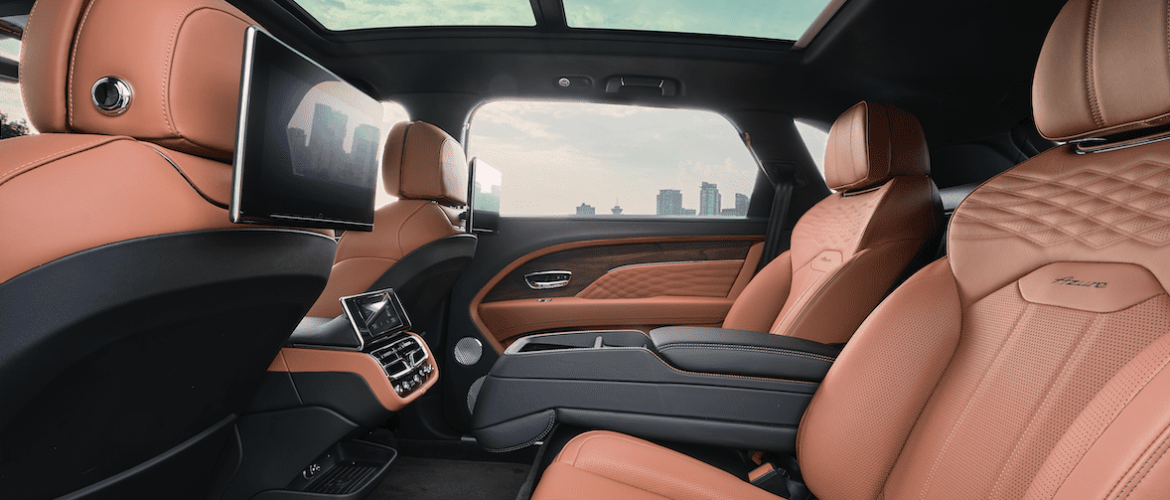
Bentley has long combined substantial performance with an unusually detailed approach to interior craftsmanship. Leather, wood veneers, metal components and carefully finished surfaces contribute to a cabin intended to feel both luxurious and distinctly automotive.
The Flying Spur’s grand-touring character is important. Unlike a vehicle designed primarily to transport rear-seat passengers, it also seeks to reward the person behind the wheel.
The current generation’s electrified V8 powertrain allows periods of electric driving under suitable conditions, offering a quieter form of progress than the traditional large combustion engines associated with the marque. Once greater performance is required, the combustion engine contributes to the car’s broader capabilities.
The transition between these operating modes, together with the suspension and cabin refinement, is central to the ownership experience.
Bentley’s extensive personalisation possibilities can produce very different results. A brightly coloured exterior, contrasting interior stitching and elaborate decorative finishes may create an unmistakable statement. A darker exterior paired with restrained leather and carefully selected veneers offers another interpretation.
Neither is inherently more authentic. The distinction is one of personal preference.
For the buyer interested in understatement, the most compelling Flying Spur may be one whose specification emphasises materials, comfort and craftsmanship rather than visual contrast.
It will never disappear into traffic in the way a Volvo estate might, but it can demonstrate restraint within an unmistakably luxurious form.
Volvo V60 Cross Country: The Appeal of Anonymity
At the opposite end of the visibility spectrum sits the Volvo V60 Cross Country.
Its inclusion in a discussion of quiet luxury requires some explanation. The V60 is not a direct competitor to the S-Class or Flying Spur, nor does it offer the same level of cabin isolation, rear-seat accommodation or bespoke craftsmanship.
Its attraction lies elsewhere.
Volvo’s design language has long favoured relatively clean surfaces, practical interiors and a measured approach to visual presentation. The V60 Cross Country adds increased ground clearance and protective exterior detailing to the familiar estate-car silhouette, creating a vehicle intended to accommodate a broader range of everyday conditions.
There is something appealing about a car whose design does not require its owner to make a statement.
The estate body provides useful luggage capacity without the height and visual presence of a large SUV. Its proportions remain relatively conventional, while the cabin places emphasis on comfortable seating, straightforward materials and practical storage.
For someone who values discretion above prestige, these qualities can be more attractive than the theatrical arrival associated with an expensive luxury saloon.
The V60 also demonstrates the difference between quiet luxury and stealth wealth. A vehicle may be chosen because it is practical, comfortable and unobtrusive, without its owner intending to communicate anything about financial status.
That distinction is worth preserving. Not every discreet purchase is a secret expression of wealth, and not every understated vehicle belongs in the same category of luxury.
The V60 Cross Country is most interesting as an example of thoughtful, relatively anonymous automotive design. Its availability also varies by market, so prospective buyers should check current local offerings rather than assume it remains a new-car option everywhere.
The Return of the Physical Control
One of the more contentious developments in automotive interiors has been the replacement of conventional buttons and switches with large touchscreens.
Digital interfaces offer considerable advantages. Navigation, media, vehicle settings and software-driven functions can be integrated into a single system, while updates may allow manufacturers to improve certain features after delivery.
Yet there are practical limitations to controlling frequently used functions through a flat glass surface.
A physical switch can often be located by touch, allowing the driver to make an adjustment without looking away from the road for long. A touchscreen may require greater visual attention, particularly when a function is hidden within several menus.
The distinction becomes important for climate controls, demisting, seat heating and other functions used regularly while driving.
The most sophisticated solution is not necessarily a cabin without screens. It is an interface that assigns each function to the method of control best suited to its use.
Digital displays are particularly effective for navigation and information that changes dynamically. Physical controls remain valuable for frequently adjusted functions that benefit from tactile feedback.
A carefully weighted rotary dial or precisely engineered switch can also provide a satisfying physical interaction. Its quality is felt every time it is used, making it a small but meaningful expression of craftsmanship.
As automotive technology becomes increasingly complex, ease of use may become one of the clearest distinctions between impressive design and genuinely intelligent design.
The Car as a Private Space
The modern luxury car is increasingly expected to provide more than transport. For owners who spend substantial time travelling between appointments, homes and airports, the cabin can become a place to work, rest or simply enjoy a period without interruption.
Manufacturers have responded with increasingly sophisticated seating, climate management, air filtration and cabin lighting systems.
Mercedes-Benz offers its Energizing Comfort functions on suitably equipped vehicles, coordinating selected comfort features to create different cabin environments. Range Rover has developed advanced air purification technologies, while Bentley has introduced seating systems intended to support comfort during extended journeys.
These developments reflect a broader interest in the quality of time spent travelling.
Yet the term wellness can be applied rather loosely in automotive marketing. A fragrance diffuser, coloured lighting system or massage programme may contribute to comfort, but it should not automatically be treated as a meaningful health intervention.
The more convincing improvements are often fundamental: better seat support, reduced noise, stable cabin temperatures, effective ventilation and a suspension that minimises unnecessary movement.
A genuinely comfortable cabin allows occupants to arrive feeling less fatigued. That is a substantial achievement in itself, without the need to present the vehicle as a substitute for a spa or treatment room.
Privacy also matters, although it should be understood realistically. Acoustic insulation and tinted glazing can create a sense of separation, but they do not eliminate the practical limitations of travelling in a public environment.
The most valuable luxury may simply be a car that makes the journey less demanding.
Jaguar Type 00: A Different Vision of Automotive Luxury
Jaguar’s Type 00 concept offers an interesting contrast to the established luxury saloons.
Unveiled as part of the marque’s reinvention, the concept introduced dramatic proportions, a highly architectural design language and an interior intended to communicate a new approach to luxury.
Its exterior is deliberately striking. The long bonnet, substantial surfaces and unusual proportions are difficult to reconcile with conventional ideas of discreet automotive design.
The interior, however, raises more interesting questions.
Jaguar explored the use of sculptural forms, carefully selected materials and a reduced visual emphasis on conventional controls. Rather than filling the cabin with familiar dashboard architecture, the concept presents an environment shaped around strong lines and integrated technology.
Its treatment of materials and digital interfaces suggests an ambition to make technology less visually dominant, allowing the architecture of the cabin to establish the atmosphere.
That is a compelling design proposition, although it remains important to distinguish a concept car from a production vehicle.
The Type 00 is not a car that can be recommended on the basis of ride comfort, cabin quietness or everyday usability. Those qualities can only be assessed properly in a finished vehicle.
Nor should the concept’s proposed features be assumed to appear unchanged in subsequent Jaguar models.
Its significance lies in the questions it poses. As luxury vehicles become increasingly digital, should their interiors resemble collections of screens, or should technology be integrated more discreetly into the surrounding architecture?
Jaguar’s answer is deliberately provocative, and its eventual influence will depend on how convincingly those ideas translate into production.
Rolls-Royce and the Art of the Commission
Rolls-Royce represents another interpretation of luxury, one in which the individual commission can become more important than the standard vehicle.
Through its Bespoke programme and Private Office approach, the manufacturer works with clients on highly individual specifications involving materials, colours, decorative techniques and personal references.
The possibilities extend beyond conventional upholstery choices. Specialist craftspeople can develop intricate marquetry, embroidery, painted surfaces and other decorative elements, creating interiors that reflect the preferences of a particular owner.
Some commissions are deliberately elaborate. Others may be visually restrained, with the significance of a material or detail known primarily to the person who requested it.
This is where automotive craftsmanship begins to resemble the commissioning of furniture, jewellery or an architectural interior.
The relationship between client and maker becomes part of the experience. Decisions about materials, colour and finish are considered in detail, while the finished vehicle reflects a particular set of preferences rather than a standard specification.
It would be misleading to describe Rolls-Royce as an inherently discreet brand. Its vehicles are widely recognised and often designed to communicate substantial presence.
Nevertheless, the commissioning process illustrates an important aspect of luxury that is easily overlooked: the value of having something made according to personal requirements.
For some clients, the most meaningful detail may be an elaborate decorative feature. For others, it may be a particular leather colour, a familiar wood or an interior arrangement that makes the car more comfortable to use.
The quality of the commission lies in how successfully those choices serve the owner.
How to Judge a Quiet Luxury Car
A car’s suitability for understated luxury cannot be established through its badge or specification sheet alone. The most useful assessment takes place during an extended drive, ideally over the roads and at the speeds the owner encounters regularly.
Several considerations deserve particular attention.
| Quality | What to examine |
|---|---|
| Cabin noise | Wind, tyre and road noise at normal motorway speeds |
| Ride comfort | How the suspension responds to rough surfaces and repeated bumps |
| Seating | Support, adjustability and comfort over an extended journey |
| Materials | Tactile quality, durability and finish of frequently touched surfaces |
| Controls | Whether common functions can be operated intuitively |
| Powertrain | Smoothness of acceleration, braking and transitions between operating modes |
| Practicality | Visibility, luggage capacity, passenger space and ease of access |
| Specification | Whether wheels, tyres and optional equipment improve or compromise comfort |
Wheel and tyre selection is particularly important. Large wheels may look attractive, but lower-profile tyres can transmit more road disturbance into the cabin, depending on the vehicle’s suspension and tyre construction.
The most visually impressive specification is therefore not always the most comfortable.
Similarly, a luxurious interior should be assessed in daylight as well as under showroom lighting. Glossy surfaces may reveal fingerprints, delicate trims can require considerable care and highly reflective materials may create unwanted glare.
A car intended for daily use should remain pleasant in ordinary conditions, not merely during a carefully prepared demonstration.
The ideal choice also depends on whether the owner drives or is driven. Rear-seat comfort may be paramount for someone who regularly travels with a chauffeur, while steering feel, visibility and the driving position will matter more to someone who enjoys covering long distances themselves.
There is no universal answer, and the most expensive vehicle is not automatically the most appropriate.
Discretion Is a Personal Choice
The association between wealth and particular cars has always been culturally complicated.
In some settings, an imposing luxury saloon communicates professional success or social standing. Elsewhere, the same vehicle may attract attention its owner would prefer to avoid.
A modest-looking estate car can offer genuine anonymity, while a Bentley or Rolls-Royce may be chosen for entirely legitimate reasons of craftsmanship, comfort and personal enjoyment.
Neither decision establishes the owner’s taste or character.
The interesting distinction lies in motivation. Someone who chooses a vehicle primarily for the attention it attracts is pursuing a different experience from someone who values the quality of its interior, the comfort of its seats or the pleasure of its engineering.
Both may purchase expensive cars, but their priorities are not the same.
Quiet luxury is most useful as a way of examining those priorities rather than as a rigid category of acceptable brands.
A beautifully specified S-Class, a carefully chosen Flying Spur and an unobtrusive Volvo estate can all make sense within that broader discussion, even though they offer very different experiences.
The Luxury of Arriving Untroubled
The most accomplished luxury cars have a quality that is difficult to communicate through photographs or performance figures. They make travel feel easier.
The suspension settles quickly after a bump. The seats remain comfortable as the miles accumulate. Controls fall naturally to hand, and the cabin maintains a consistent sense of calm despite the activity outside.
These achievements require substantial engineering, careful material selection and an understanding of how people actually use cars.
They also become more meaningful with time. A dramatic exterior may provide immediate excitement, but the satisfaction of a quiet cabin and a comfortable seat can be appreciated on every journey.
The understated way to arrive is therefore less concerned with avoiding attention than with choosing what matters during the journey itself.
A truly refined car allows its occupants to step out feeling composed, comfortable and ready for whatever comes next. The experience is complete before anyone outside has noticed what brought them there.
Frequently Asked Questions
What are quiet luxury cars?
Quiet luxury cars prioritise refinement, comfort, quality materials and thoughtful engineering over conspicuous styling or excessive performance displays. They may be visually understated, but discretion is only one aspect of the category.
Which cars are associated with understated luxury?
The Mercedes-Benz S-Class is a strong example of comfort-led luxury engineering. The Bentley Flying Spur offers exceptional craftsmanship and grand-touring refinement, although it is more visually conspicuous. Vehicles such as the Volvo V60 Cross Country appeal to buyers who place greater emphasis on discretion and practicality.
Is the Mercedes-Benz S-Class a quiet luxury car?
Yes. The S-Class is particularly associated with cabin refinement, ride comfort and sophisticated technology. A restrained specification can offer substantial luxury without the more conspicuous styling associated with some higher-profile alternatives.
Are Bentley cars considered quiet luxury?
Bentley vehicles are recognisable luxury products, but models such as the Flying Spur can express quiet luxury through cabin craftsmanship, acoustic refinement and carefully chosen materials. Their exterior presence makes them less discreet than many conventional premium cars.
What makes a luxury car cabin quiet?
Cabin refinement depends on acoustic insulation, glazing, door seals, body construction, suspension isolation, tyre selection and aerodynamic design. The effectiveness of these measures becomes particularly apparent at motorway speeds and on rough road surfaces.
Is Jaguar Type 00 a production car?
No. Jaguar Type 00 is a design concept that introduced the marque’s new styling direction. Its ideas concerning materials, interior architecture and technology should not be treated as confirmed production specifications.
Are electric cars quieter than petrol cars?
Electric vehicles eliminate conventional combustion-engine noise during electric operation, particularly at lower speeds. However, tyre noise, wind noise and road-surface vibration remain important, so an electric powertrain does not automatically guarantee a quieter cabin.
EXPLORE LXRY
_____________
From exceptional travel and private experiences to fine watches, fashion, interiors and specialist services, LXRY connects readers with a carefully selected network of luxury businesses.
Many of the hotels and specialists we write about are ones we have known and worked with over the past decade. If something here has caught your interest, tell us what you have in mind and we will point you in the right direction.
Enquire Now