The Quiet Luxury Hotels That Don’t Advertise
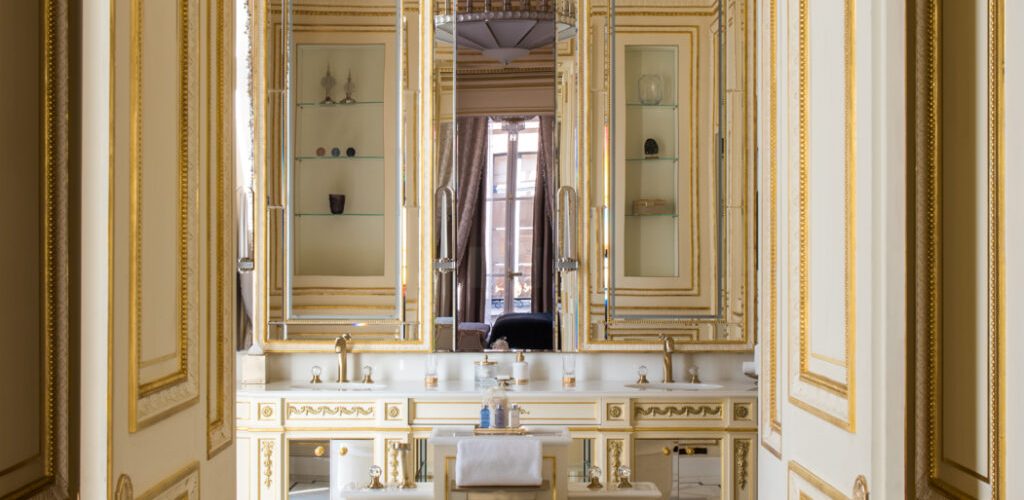
At 1 Place Vendôme in Paris, the name of the hotel is simply its address. There is no grand declaration of the jewellery house behind it, no elaborate attempt to announce its exclusivity to passing visitors. The property occupies one of the most prestigious squares in the French capital, yet its appeal rests partly on the feeling that one has entered a private residence rather than a conventional hotel.
It is an increasingly interesting proposition in an industry where luxury properties compete for attention through spectacular openings, celebrity visits and carefully orchestrated social media campaigns. Some of the most established names in hospitality have taken a different approach, allowing reputation, personal recommendations and the consistency of their service to do much of the persuasive work.
Few hotels operate without marketing altogether. Even the most discreet maintain websites, cultivate relationships with travel advisers and receive extensive editorial coverage. What distinguishes them is a more selective approach to visibility, often accompanied by an emphasis on privacy and personal familiarity.
The question is whether that restraint produces a better experience for the guest, or merely another form of exclusivity.
Aman: The Reputation That Travelled by Word of Mouth
When Adrian Zecha opened Amanpuri in Phuket in 1988, he established a model that challenged the prevailing assumptions of luxury resort development. At a time when substantial room counts and elaborate facilities were often regarded as measures of commercial ambition, Amanpuri offered an intimate environment shaped around tranquillity, architecture and attentive service.
Zecha had originally been looking for land on which to build a holiday home. The secluded setting he discovered eventually became the foundation of a hotel business whose influence would extend far beyond Thailand.
Aman’s early approach to promotion was unusually restrained. Accounts of its founding years describe a reliance on personal recommendations, invitations to trusted guests and carefully distributed postcards announcing forthcoming openings. The intention was to develop a community of travellers who understood the experience and would introduce it to others.
The strategy helped create the devoted following sometimes described as the Amanjunkies, guests whose loyalty extended across several properties and destinations.
What made the model effective was not simply the absence of conventional advertising. It was the consistency of an identifiable hospitality philosophy. Guests could expect carefully considered architecture, a sense of separation from their surroundings and service intended to feel personal rather than ceremonial.
As Aman has expanded into major cities, branded residences and increasingly ambitious developments, its relationship with exclusivity has inevitably become more complicated. The original philosophy remains influential, but the scale and visibility of the contemporary business are very different from those of a small resort on a secluded Thai peninsula.
Its history nevertheless demonstrates how a hotel can build extraordinary recognition through the experience it delivers rather than through the volume of its advertising.
La Réserve Paris: The Hotel as a Private Residence
At 42 Avenue Gabriel, La Réserve Paris occupies a nineteenth-century building whose intimate scale distinguishes it from many of the capital’s grand palace hotels.
With just 15 rooms and 25 suites, the property was conceived around the atmosphere of a private Parisian residence. Jacques Garcia’s interiors combine silk wall coverings, antique furniture, marble fireplaces and richly layered fabrics, creating an environment that is luxurious without resembling a conventional international hotel.
The residential character extends to the service. Each room and suite has a dedicated butler, allowing practical arrangements to be handled with a degree of personal continuity that can be difficult to achieve in a much larger property.
The hotel’s restaurant, Le Gabriel, has three Michelin stars, adding a significant gastronomic dimension to the experience. Yet the property’s defining appeal is arguably the ability to return from the activity of central Paris to somewhere that feels comparatively sheltered.
La Réserve is hardly unknown, and its considerable critical recognition makes any suggestion of complete secrecy misleading. Its achievement lies in preserving a sense of intimacy despite that reputation.
For guests who value personal service and familiar surroundings, the atmosphere can be more important than the public profile of the hotel itself.
1 Place Vendôme: Chopard’s Unusually Discreet Address
Few recent Parisian hotel openings have approached their identity quite like 1 Place Vendôme.
Created by the family behind Chopard, the property opened in 2023 with 15 rooms and suites, occupying an exceptional address in the heart of the city’s historic jewellery district. Rather than naming the hotel after the watch and jewellery house, the family chose the address itself.
The distinction is more than cosmetic. The property was conceived as an intimate residence, with access to its private spaces reserved for staying guests and invited visitors rather than casual passing trade.
Interior designer Pierre-Yves Rochon worked with specialist craftspeople to create rooms that reflect the individuality of a private home. Original artworks, elaborate textiles and carefully commissioned decorative elements give the spaces a character quite different from the uniformity of many luxury hotels.
The interiors are not minimalist. Indeed, some are richly decorative. Their discretion comes from the limited scale of the property and the personal nature of the experience, rather than an absence of ornament.
The hotel also offers an interesting lesson in branding. Chopard’s involvement is well documented, but it is not the principal identity presented to someone arriving at the door.
For a luxury business whose products are often associated with highly visible craftsmanship, the decision to establish a hotel under an address rather than a familiar commercial name is particularly revealing.
Louma: The English Country House Without the Formalities
In the Dorset countryside, Louma offers a less metropolitan interpretation of intimate hospitality.
Set within the landscape of the Marshwood Vale, the property combines accommodation in a farmhouse, converted stables, stone barns and other individually designed spaces. Its atmosphere draws on the familiarity of a country home, with an emphasis on food, outdoor activity and time spent enjoying the surrounding landscape.
The appeal is not the absence of luxury facilities. Louma offers wellness experiences and opportunities to explore the countryside, but its identity is shaped around informality rather than the ceremony associated with a traditional country-house hotel.
This is an important distinction in British hospitality, where historic properties can sometimes feel governed by inherited rules about dress, dining and behaviour.
An intimate country hotel can provide exceptional comfort while allowing guests to move through the day with greater freedom. The pleasure may lie in a long lunch, a walk through the grounds or returning to a room that feels more like a personal retreat than a standard hotel suite.
Louma’s approach demonstrates that discretion need not depend on secrecy or elaborate exclusivity. It can emerge from the way a property allows guests to feel at ease.
Tawaraya: A Tradition Older Than Luxury Marketing
In Kyoto, Tawaraya provides a particularly compelling reminder that intimate hospitality existed long before the modern language of quiet luxury.
The historic ryokan traces its heritage back several centuries and belongs to a tradition in which architecture, seasonal awareness and personal service are closely connected.
The experience of a traditional Japanese inn differs substantially from that of a European luxury hotel. Tatami rooms, carefully arranged interiors, bathing rituals and seasonal meals reflect a hospitality culture in which attention is given to the relationship between guest, space and time.
Tawaraya has long attracted travellers interested in this distinctive approach. Its reputation has developed through generations of hospitality rather than through the familiar methods of contemporary hotel promotion.
There is a tendency to romanticise such properties as entirely inaccessible, with reservations supposedly requiring secret introductions or obscure personal connections. That is an increasingly inaccurate picture. Tawaraya now maintains an official website with reservation information, including an online booking option.
The more interesting aspect of its identity is not the difficulty of making a reservation. It is the continuity of a hospitality tradition in which the details of the stay remain central.
Discretion here is part of a much older understanding of service, not a recently invented marketing strategy.
The Connaught: When Reputation Outlives Fashion
London’s Connaught offers another perspective on the relationship between heritage and visibility.
The hotel traces its origins to 1815 and acquired its present name during the First World War. Over the generations, it has developed a reputation for refined service and an atmosphere closely associated with its Mayfair setting.
The Connaught is certainly not a hidden hotel. Its celebrated bars, restaurants, art collection and international reputation ensure that it remains highly visible within luxury hospitality.
Yet its appeal is rooted partly in continuity. Returning guests encounter an established institution whose identity has evolved without abandoning its historical character.
That balance between familiarity and renewal is difficult to maintain. A hotel must remain relevant to contemporary travellers while preserving the qualities that made it distinctive in the first place.
The Connaught demonstrates that discretion and publicity are not necessarily opposites. A property can be widely celebrated while still offering a personal and carefully managed guest experience.
When Silence Stops Being a Virtue
The limits of discreet hospitality became apparent during a widely reported controversy involving Amanvari, Aman’s resort in Mexico, in August 2026.
Hotel reviewer Ryan Walker said that a reservation he had booked and paid for was cancelled shortly before his planned arrival. When he subsequently reached the property, he was refused entry, and police were reportedly called during the encounter.
The incident attracted substantial attention after Walker published his account and footage online. Subsequent reporting described a dispute over the circumstances of the cancellation, with the resort contesting aspects of the reviewer’s account.
The episode raises a question that extends well beyond one hotel or one guest.
Discretion can be an admirable quality when it protects privacy and allows service to feel unobtrusive. It becomes considerably less persuasive when a guest needs an explanation, assistance or a clear response to a problem.
Luxury hospitality depends on trust. Guests accept substantial prices partly because they expect unusual competence, personal attention and the confidence that difficulties will be handled properly.
A restrained public profile cannot replace those obligations.
The finest hotels understand that silence is valuable only in the appropriate circumstances. When something goes wrong, communication becomes part of the service.
The Reputation That Matters
The hotels most associated with discretion are not necessarily those with the least publicity. They are the properties that make guests feel their presence is understood without being unnecessarily observed, and whose service remains dependable regardless of who is staying.
Aman helped establish a modern model of intimate resort hospitality. La Réserve Paris demonstrates the appeal of a residential atmosphere in a major capital. 1 Place Vendôme brings the idea of a private home into one of the world’s most prestigious addresses, while Tawaraya reflects a hospitality tradition shaped over centuries.
Their approaches differ, but each suggests that the most valuable reputation is built through the experience of staying, rather than through the promises made beforehand.
A hotel may choose how loudly to announce itself. What ultimately matters is how well it welcomes the people who arrive.
EXPLORE LXRY
_____________
From exceptional travel and private experiences to fine watches, fashion, interiors and specialist services, LXRY connects readers with a carefully selected network of luxury businesses.
Many of the hotels and specialists we write about are ones we have known and worked with over the past decade. If something here has caught your interest, tell us what you have in mind and we will point you in the right direction.
Enquire Now