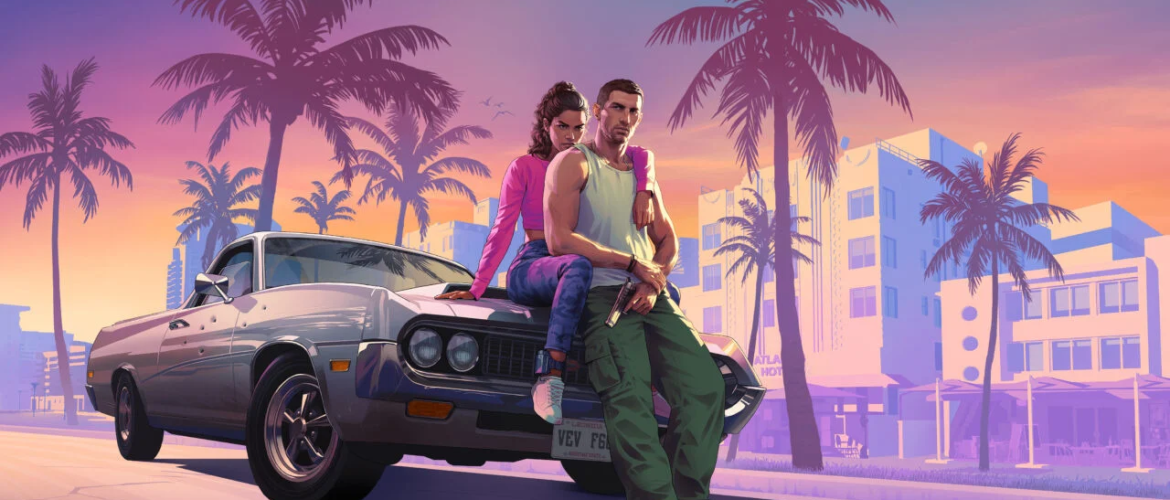
GTA 6 and the Real Miami: The Locations Behind Vice City
From the Art Deco hotels of Ocean Drive to the murals of Wynwood and the waterfront skyline of Biscayne Bay, Grand Theft Auto VI draws upon a city whose architecture, art and extraordinary contrasts have long made it one of America’s most recognisable destinations. We explore the real Miami behind Rockstar’s fictional Vice City.
Miami has always possessed a certain theatrical quality. Its pastel-coloured hotels, waterfront towers, extravagant automobiles and palm-lined boulevards create a cityscape that seems almost deliberately designed for the screen. Few American cities are so immediately recognisable, and fewer still have developed an identity in which architecture, nightlife, art and conspicuous wealth coexist quite so visibly.
It is this distinctive character that Rockstar Games has returned to for Grand Theft Auto VI, scheduled for release on 19 November 2026. The fictional Vice City, first introduced more than two decades ago, has evolved from a stylised interpretation of 1980s Miami into a far more detailed representation of contemporary South Florida.
The resemblance extends well beyond the familiar beaches and neon-lit streets. Fans examining Rockstar’s promotional footage have identified more than 100 locations that appear to correspond with real places across Miami and the surrounding region, according to reporting by CBS Miami. From individual hotel façades to major public landmarks, the level of architectural recognition is remarkable.
Yet the relationship between Miami and Vice City has become more interesting than a collection of visual references. The city itself has embraced the cultural attention surrounding GTA 6, with public art, promotional installations and collaborations connecting Rockstar’s fictional world with the streets that inspired it.
For those curious about the real Miami behind GTA 6, the most compelling discoveries are not necessarily the most extravagant. They are found in the architectural details, historic neighbourhoods and cultural institutions that give the city its character.
1. Ocean Drive: The Real South Beach Behind Vice City
<escape></escape>Of all the locations associated with Grand Theft Auto, few are as immediately recognisable as Ocean Drive. The celebrated stretch of South Beach, with its Art Deco hotels, outdoor terraces, vintage architectural details and Atlantic-facing promenade, has provided much of the visual language associated with Vice City.
The real Ocean Drive is considerably more nuanced than its fictional counterpart. Behind the illuminated signs and colourful façades lies one of America’s most significant concentrations of Art Deco architecture, much of it dating from the 1930s and 1940s.
The district’s preservation was not inevitable. By the 1970s, many of its buildings had deteriorated, and redevelopment threatened the character of the neighbourhood. Preservation efforts, notably those associated with Barbara Baer Capitman and the Miami Design Preservation League, helped secure the architectural legacy that now defines South Beach.
Rockstar’s interpretation captures the atmosphere of the district, but some of its most interesting references lie in individual buildings.
The Breakwater Hotel and GTA 6’s Hotel Boardwalk
One of the most recognisable buildings on Ocean Drive is the Breakwater Hotel, at 940 Ocean Drive. Originally constructed in 1936, the hotel is distinguished by its striking vertical tower, symmetrical façade and unmistakable Art Deco geometry.
Fans comparing GTA 6 footage with real Miami have identified a fictional building known as Hotel Boardwalk as a counterpart to the Breakwater.
The resemblance is particularly interesting because the Breakwater is not simply another pastel-coloured South Beach hotel. Its architectural proportions and illuminated tower make it one of the defining landmarks of the district, especially after dark.
For visitors exploring the real Miami, the building offers a useful introduction to the architectural identity that Rockstar has translated into Vice City.
Hotel Victor and the Architectural Reference to L. Murray Dixon
A short distance along Ocean Drive stands Hotel Victor, another important example of Miami Beach’s Art Deco heritage.
Designed by architect L. Murray Dixon and completed in 1937, the hotel reflects the streamlined architectural style that helped establish South Beach’s distinctive appearance.
Fans have identified its apparent GTA 6 counterpart as Hotel Dixon, a name that may be a deliberate reference to the architect responsible for the original building.
If intentional, it is a particularly thoughtful detail. Rather than simply recreating a recognisable façade, Rockstar would be acknowledging a figure whose work helped shape the architectural identity of Miami Beach.
Dixon was responsible for numerous buildings across the district, and his contribution remains visible in the carefully proportioned façades, curved corners and decorative details that continue to attract visitors.
The possible reference illustrates why exploring the real locations behind Vice City can reveal considerably more than the visual similarities between a game and a city.
2. Wynwood: From Miami’s Street Art to GTA 6’s Stockyard
If Ocean Drive represents Miami’s historic architectural identity, Wynwood reflects its more recent cultural transformation.
Once characterised by warehouses and industrial buildings, the neighbourhood has developed into one of the city’s most prominent creative districts. Its streets are known for large-scale murals, contemporary galleries, independent businesses and a visual culture that has attracted international attention.
At the centre of this transformation is Wynwood Walls, the outdoor street art destination established by developer Tony Goldman in 2009.
The project helped turn an overlooked industrial area into an internationally recognised centre for contemporary urban art. Over time, the district has attracted artists, collectors, designers and visitors interested in a side of Miami quite different from the polished waterfront hotels of South Beach.
GTA 6’s fictional world reportedly draws on Wynwood through an area identified as Stockyard, reflecting the neighbourhood’s industrial origins and its association with street art.
What makes the connection particularly significant is that it has extended beyond visual inspiration into a real-world collaboration.
Rockstar Games and the Wynwood Walls Collaboration
According to the partnership announcement described in the research, Wynwood Walls and Rockstar Games have collaborated on a programme connecting the museum with the release of Grand Theft Auto VI.
The initiative includes ten original murals associated with GTA 6, with participating artists reported to include Miami-based ATOMIK and Tatiana Suarez, alongside internationally recognised names such as FAILE and Ron English.
The reported programme also includes complimentary museum admission for Miami-Dade residents through 2028 and a collection of merchandise connected to the Art of Vice City.
These details, particularly the exhibition dates and admission conditions, should be confirmed against Wynwood Walls’ current visitor information before planning a visit.
The cultural significance of the collaboration is nevertheless clear. A neighbourhood that helped inspire the visual identity of a fictional city is now participating in the promotion of that same fictional world.
It is an unusual reversal of the relationship between art and entertainment. Rather than merely borrowing the appearance of a creative district, a major entertainment company is engaging with the artists and institutions associated with it.
For visitors, Wynwood offers an opportunity to experience the artistic environment behind the game’s visual references while discovering a neighbourhood whose identity extends far beyond the release of GTA 6.
3. Downtown Miami: The Skyline Behind Vice City’s Modern Identity
While South Beach provides much of Vice City’s atmosphere, Downtown Miami and the surrounding waterfront districts contribute the scale and architectural ambition of a contemporary international city.
Miami’s skyline has changed dramatically over the past two decades. Residential towers, hotels and commercial developments have transformed the waterfront, particularly around Brickell, Downtown and the northern reaches of Biscayne Bay.
This modern cityscape provides a striking contrast to the historic hotels of Miami Beach, and it is precisely that contrast which makes Miami such an effective setting for Grand Theft Auto.
Fans examining GTA 6 footage have identified several familiar Downtown landmarks, including the Kaseya Center, home of the Miami Heat basketball team.
The arena is reportedly represented by a fictional venue called Sahara Arena. Its waterfront setting and architectural form make it a recognisable reference for those familiar with the real building.
Other comparisons have focused on road infrastructure around Biscayne Boulevard, including an overpass near 15th Street, where the arrangement of the surrounding streets has attracted attention from local observers.
These are details that may pass unnoticed by visitors but are immediately familiar to residents.
The wider Downtown landscape is equally important. Miami’s transformation into a centre for international finance, property investment, hospitality and culture has given the city an identity that extends well beyond its traditional reputation as a beach destination.
Brickell, in particular, has developed into a district of luxury residential towers, international restaurants and high-end hotels, while nearby waterfront neighbourhoods offer a different perspective on the city’s relationship with the water.
For anyone interested in contemporary Miami, these districts reveal the commercial and architectural forces shaping the city that Vice City seeks to reinterpret.
4. Biscayne Bay, PortMiami and the City’s Relationship With the Water
Miami’s relationship with the sea is fundamental to its identity.
Biscayne Bay separates the mainland from Miami Beach, creating a waterfront landscape of islands, marinas, causeways and residential enclaves. The bay is also central to the city’s luxury lifestyle, with private boats, waterfront residences and large yachts forming a familiar part of the scenery.
The visual influence on GTA 6 is apparent in its coastal setting, although individual vessels, marinas and waterfront properties should not be treated as exact real-world recreations without supporting evidence.
PortMiami, one of the world’s major cruise ports, has also been identified among the real-world references visible in promotional material.
Its position near Downtown Miami makes it an important part of the city’s maritime landscape, with cruise ships, commercial vessels and the surrounding skyline creating a distinctive combination of industry and leisure.
Beyond the port, the waterways around Miami offer a considerably more private perspective on the city.
A charter through Biscayne Bay can reveal the waterfront residences of Miami Beach, the islands between the mainland and the Atlantic, and the architectural contrasts that are difficult to appreciate from the streets alone.
The experience is particularly revealing around sunset, when the illuminated towers of Downtown begin to reflect across the bay.
For visitors interested in the real luxury lifestyle associated with Vice City, the waterfront is among the most compelling places to begin.
5. Miami International Airport: The Gateway to Vice City
Miami International Airport is another landmark identified by fans examining GTA 6’s representation of South Florida.
The airport’s importance extends well beyond its appearance in the fictional world. As one of the principal international gateways to the United States, it has played a significant role in Miami’s development as a centre for business, tourism and connections with Latin America and the Caribbean.
Its proximity to Downtown and Miami Beach makes it central to the experience of arriving in the city.
For international travellers, Miami is often the beginning of a wider itinerary incorporating the Florida Keys, the Bahamas or other Caribbean destinations.
The airport also reflects the commercial character of modern Miami. The city has become an important base for international businesses, property investors and private aviation, with several airports across South Florida serving different requirements.
Within GTA 6, the recognition of an airport inspired by Miami International contributes to the impression of a functioning metropolitan region rather than an isolated fictional playground.
In the real world, it is an essential part of the infrastructure connecting Miami with the global economy.
6. Little Havana and the Cultural Identity of Miami
Architecture and geography explain only part of Miami’s appeal. The city’s identity has been shaped just as profoundly by the communities that have made it their home.
Little Havana, centred around Calle Ocho, is one of the most important examples.
The neighbourhood’s Cuban heritage is visible in its cafés, restaurants, music, cigar shops and public spaces. Domino Park, officially Máximo Gómez Park, remains one of its best-known landmarks, while the surrounding streets reflect generations of cultural and commercial history.
GTA 6’s fictional Little Cuba appears to draw upon this distinctive environment.
The relationship is particularly relevant because Miami’s cultural identity cannot be reduced to its beaches, hotels or expensive cars. Its language, food, music and neighbourhood traditions are inseparable from the city’s character.
For visitors, Little Havana offers an experience quite different from South Beach or Brickell.
Its appeal lies in the atmosphere of the streets, the continuity of local businesses and the cultural traditions that have survived alongside Miami’s rapid development.
A serious exploration of the real Vice City should acknowledge this side of Miami rather than concentrate exclusively on its more extravagant surroundings.
7. The Florida Keys: GTA 6’s Leonida Keys
Beyond Miami, Rockstar’s fictional state of Leonida draws inspiration from the wider geography of Florida.
Among its most recognisable references are the Leonida Keys, corresponding to the Florida Keys, the chain of islands extending southwest from the mainland.
The real Keys are connected by the Overseas Highway, a remarkable coastal route that crosses open water, small islands and historic bridges on its way towards Key West.
The journey offers a dramatic change of pace from Miami.
Where the city is defined by its density, international energy and architectural ambition, the Keys are characterised by marinas, low-rise waterfront properties, fishing communities and a more relaxed relationship with the sea.
Key Largo is known for diving and access to the surrounding marine environment, while Islamorada has a long association with sport fishing and private boating.
Further south, Key West offers historic architecture, established restaurants and a distinctive cultural identity shaped by its maritime history.
The Keys also provide an alternative perspective on luxury travel. Rather than concentrating on large hotels and urban nightlife, the region lends itself to private waterfront accommodation, boating and itineraries organised around the natural environment.
Their inclusion within the geography of Leonida gives GTA 6 a broader landscape than the familiar streets of Vice City alone.
8. The Everglades and GTA 6’s Grassrivers
Another important geographical reference is Grassrivers, Rockstar’s fictional interpretation of the Florida Everglades.
The Everglades are among the most distinctive natural environments in the United States, comprising an extensive subtropical wetland system of sawgrass marshes, mangroves, waterways and wildlife habitats.
The landscape is a dramatic departure from the urban environments associated with Vice City.
Its importance lies not only in its visual character but also in its ecological significance. The Everglades support a complex network of habitats and species, while their water systems are essential to the wider South Florida environment.
For visitors, the region offers opportunities to explore a side of Florida that is often overlooked by those concentrating exclusively on Miami’s beaches and nightlife.
Guided excursions, wildlife observation and visits to protected areas provide a more considered introduction to the landscape than treating it simply as an adventure attraction.
The contrast between the Everglades and Miami’s urban coastline is one of the defining characteristics of South Florida, and its inclusion within Leonida helps explain the geographical ambition of Rockstar’s fictional setting.
9. Miami’s Embrace of Vice City
Perhaps the most unusual aspect of GTA 6’s relationship with Miami is the extent to which the fictional city has become part of the real city’s cultural conversation.
Grand Theft Auto has borrowed from Miami for decades, but the latest release arrives at a time when entertainment, tourism and urban identity are increasingly interconnected.
The reported collaboration with Wynwood Walls provides a tangible example, bringing the game’s visual identity into an established cultural institution.
Additional reports have described promotional installations and advertising arrangements involving locations across Miami. Claims concerning the precise financial value of those campaigns, including reported expenditure on signage and a multimillion-dollar promotional agreement, require confirmation through primary documentation before they can be presented as established figures.
The wider significance does not depend on those numbers.
Miami has long been represented in films, television, music and popular culture, often through a highly stylised combination of glamour, excess and criminality. GTA 6 continues that tradition, but with a level of visual detail that encourages audiences to identify individual buildings and streets.
For the city, the attention offers an opportunity to introduce a new international audience to its architecture, neighbourhoods and cultural institutions.
For visitors, it creates an unusual way of approaching a destination: recognising the fictional version first, then discovering the considerably richer and more complicated reality.
10. Experiencing the Real Vice City: Miami Beyond the Game
Those travelling to Miami because of GTA 6 will discover that the most rewarding experiences often have little to do with reproducing moments from the game.
Ocean Drive is best appreciated through its architectural history, particularly in the early morning or evening when the façades and illuminated details reveal the character of the Art Deco district.
Wynwood rewards visitors willing to explore beyond its best-known murals, with galleries, independent creative spaces and an evolving contemporary art scene.
Downtown and Brickell offer a different perspective, reflecting Miami’s emergence as an international commercial and residential centre. Biscayne Bay provides the opportunity to experience the city’s architecture from the water, while the Florida Keys and Everglades reveal the landscapes beyond its metropolitan boundaries.
For travellers seeking a more private experience, Miami also offers an established luxury hospitality market, including waterfront hotels, private residences, yacht charters and access to a wide range of cultural and dining experiences.
The distinction between the fictional and real cities becomes most apparent here.
Vice City is designed around spectacle, exaggeration and entertainment. Miami’s appeal is more enduring, shaped by its architectural heritage, international communities, artistic ambition and remarkable coastal setting.
GTA 6 may introduce millions of people to a recognisable version of South Florida, but the real destination offers something a fictional recreation cannot: the opportunity to experience the places, people and cultural history that inspired it.
The Real Miami Behind Vice City
What makes Grand Theft Auto VI’s depiction of Miami particularly compelling is not simply the accuracy of individual buildings or streets. It is the way those references collectively evoke a city whose identity has always been difficult to separate from its representation in popular culture.
The Breakwater’s Art Deco tower, Wynwood’s painted warehouses, the modern skyline of Biscayne Bay and the island landscapes of the Florida Keys belong to very different chapters of South Florida’s history. Together, they form the distinctive environment that Rockstar has drawn upon in creating Leonida.
For some, recognising these places will be part of the pleasure of exploring GTA 6. For others, it may provide the inspiration to visit Miami for the first time.
The fictional city may be familiar, but the real Miami remains considerably more interesting than any single interpretation of it.
Location comparisons discussed in this article are based on reported visual correspondences and publicly available promotional material; they do not imply that every location has been individually confirmed by Rockstar Games. LXRY is an independent publication and is not affiliated with Rockstar Games or Take-Two Interactive.
EXPLORE LXRY
_____________
From exceptional travel and private experiences to fine watches, fashion, interiors and specialist services, LXRY connects readers with a carefully selected network of luxury businesses.
Many of the hotels and specialists we write about are ones we have known and worked with over the past decade. If something here has caught your interest, tell us what you have in mind and we will point you in the right direction.
Enquire Now
LXRY: Men | Women | Travel | Lifestyle | Partner Network