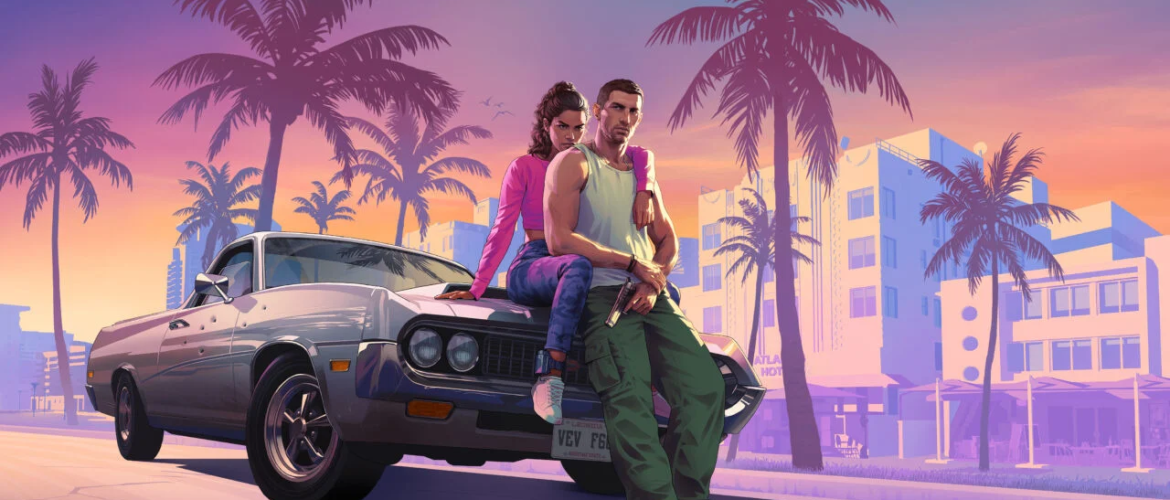
GTA 6 Luxury Fashion: The Real Brands Behind Vice City’s Style
From watches recalling Rolex and Audemars Piguet to jewellery influenced by Chrome Hearts and the unmistakable glamour of Italian fashion, Grand Theft Auto VI draws upon a world of recognisable luxury. The details offer an intriguing portrait of how designer fashion, status and contemporary streetwear have become part of the visual language of Vice City.
There is a particular kind of wealth that Miami has always displayed with considerable confidence. It is visible in the watches worn beside hotel swimming pools, the jewellery accompanying otherwise casual clothing, the designer handbags carried through Bal Harbour and the carefully assembled wardrobes of those who frequent the city’s restaurants and private clubs. Unlike cities where luxury is expressed through restraint, Miami has long accommodated a more theatrical interpretation of personal style, shaped by its international population, tropical climate and relationship with entertainment.
It is precisely this environment that makes the return of Grand Theft Auto to Vice City so interesting from a fashion perspective. Rockstar Games has never been particularly interested in presenting wealth as a purely financial condition. Its fictional worlds examine how money changes behaviour, appearance and ambition, often through an exaggerated interpretation of the products people choose to own. Expensive automobiles, extravagant properties and recognisable clothing have become part of the franchise’s distinctive social commentary.
With Grand Theft Auto VI scheduled for release on 19 November 2026, the attention surrounding its visual detail has extended to the wardrobes of its characters. Complex has identified clothing, jewellery and accessories in promotional material that appear to reference some of the most recognisable names in contemporary luxury, including Chrome Hearts, Gucci, Rolex, Audemars Piguet, Hermès, Louis Vuitton and Versace. Nike and Converse have also been mentioned among the apparent influences, reflecting the increasingly close relationship between streetwear and designer fashion.
These are visual observations rather than confirmed collaborations. A watch resembling a Rolex does not necessarily represent a particular Rolex model, just as a handbag with familiar proportions cannot automatically be attributed to Hermès. Rockstar’s fictional products frequently borrow recognisable design elements without reproducing the original brand, allowing its artists to evoke an established identity while retaining the freedom to parody it.
What makes these references worth examining is not simply the possibility of recognising an expensive accessory within a video game. It is the extent to which luxury fashion has developed a visual language that audiences can understand without seeing a manufacturer’s name.
Chrome Hearts and the Influence of Luxury Streetwear
Among the reported references, Chrome Hearts is perhaps the most revealing of how contemporary luxury has evolved. The Los Angeles label occupies an unusual position within fashion, combining the craftsmanship and pricing associated with established luxury houses with an aesthetic rooted in motorcycle culture, rock music and elaborate silver jewellery.
Founded in 1988 by Richard Stark, the company developed its identity through leather goods and accessories before expanding into clothing, eyewear, furniture and other objects. Its Gothic lettering, ornamental crosses and substantial silver pieces have become particularly recognisable, while its unconventional retail approach has contributed to an identity that feels deliberately removed from mainstream fashion marketing.
Chrome Hearts is expensive, but its appeal has never depended solely upon conventional ideas of elegance. The brand’s cultural position has been shaped by musicians, collectors and figures whose personal style combines high-value objects with influences from streetwear and alternative fashion. A substantial silver necklace or heavily decorated leather accessory can communicate wealth without resembling anything traditionally associated with European luxury.
That distinction makes the label an especially relevant reference for Vice City. Miami’s contemporary fashion culture accommodates precisely this combination of extravagance and informality, where elaborate jewellery may accompany a simple T-shirt and luxury watches are worn with sportswear rather than tailoring. The apparent Chrome Hearts influences identified in GTA 6’s promotional material suggest an understanding of this visual environment, although individual items cannot yet be attributed to specific products.
The wider significance lies in how readily the aesthetic can be recognised. Gothic-inspired silverwork and distinctive decorative details have become part of a broader fashion vocabulary, extending far beyond the original customers of the brand. Rockstar can draw upon that vocabulary to establish a character’s taste and social identity without needing to reproduce a particular piece of jewellery.
Rolex, Audemars Piguet and the Language of Expensive Watches
Watches occupy a different position within the luxury market because their significance is often communicated through relatively small details. A particular bracelet, bezel or case profile can reveal considerably more to an informed observer than a prominent designer logo, while remaining almost invisible to someone unfamiliar with watchmaking.
Rolex has spent generations establishing this kind of recognition. The Daytona, Submariner, GMT-Master II and Day-Date each possess an identity shaped by design, history and the people who have worn them. Although their original purposes differ considerably, the models have acquired a cultural significance extending beyond their mechanical functions. In many social environments, a Rolex is understood as a symbol of financial achievement before its owner has said a word.
The company’s influence is especially relevant to a fictional world concerned with the outward expression of wealth. A substantial metal bracelet or recognisable sports-watch silhouette can immediately suggest a particular level of affluence, even when the fictional object carries a different name. Complex has noted apparent Rolex-inspired details within GTA 6 imagery, but the available observations do not establish an exact model or confirm that a licensed Rolex product appears in the game.
Audemars Piguet offers a related but distinctly different form of recognition. Founded in Le Brassus in 1875, the Swiss manufacturer is particularly associated with the Royal Oak, introduced in 1972 and designed by Gérald Genta. Its octagonal bezel, exposed screws and integrated bracelet challenged established expectations of what an expensive watch should look like, helping to transform the status of the luxury sports watch.
Over subsequent decades, the Royal Oak developed a following among collectors, musicians and athletes, becoming one of the most recognisable watches in contemporary popular culture. Its distinctive architecture makes it an obvious point of comparison when a fictional watch displays similar proportions, although such resemblance is not sufficient to identify a particular Audemars Piguet reference.
The distinction between the two manufacturers also reveals something about the way watches function as social symbols. Rolex has cultivated a broad recognition grounded in continuity and familiar design, while the Royal Oak communicates a more explicitly architectural approach to luxury. Both can suggest considerable wealth, but they do so through different visual identities.
For Rockstar’s artists, such distinctions provide a useful means of communicating character. An expensive watch can imply success, ambition, vanity or an attempt to project status, depending upon the person wearing it and the circumstances in which it appears. In a franchise that has always been interested in the performance of wealth, the wristwatch is a particularly effective detail.
Gucci and Louis Vuitton: When Luxury Becomes Instantly Recognisable
The influence of Gucci and Louis Vuitton is somewhat different because both houses have developed collections of visual symbols that are recognised far beyond the traditional luxury market. Their monograms, decorative motifs and distinctive accessories have become part of popular culture, appearing in music, photography, fashion commentary and countless interpretations of contemporary wealth.
Gucci’s history begins in Florence in 1921, when Guccio Gucci established a leather goods business that would eventually become one of Italy’s most internationally recognised fashion houses. Its equestrian references, horsebit hardware and interlocking G motif helped establish a distinctive identity, while successive creative directors expanded the house’s influence across clothing, accessories and contemporary fashion.
What makes Gucci especially interesting in the context of Vice City is the ease with which its design codes can suggest luxury even without an identifiable label. A particular combination of decorative elements, familiar stripe arrangements or ornate accessories may evoke the house’s aesthetic without reproducing a specific product. The apparent Gucci references identified by Complex belong within this broader visual tradition, although there is no established basis for describing them as officially licensed garments.
Louis Vuitton has developed a similarly recognisable identity through a rather different history. Founded in Paris in 1854, the house originally specialised in luggage and travel goods, establishing its reputation through the craftsmanship and practicality of trunks designed for an increasingly mobile clientele. Its monogram canvas subsequently became one of the most familiar symbols of luxury, extending across handbags, accessories and fashion collections.
The association with travel is particularly appropriate for Miami, a city shaped by international movement, tourism and its position between North America, Latin America and the Caribbean. Designer luggage, handbags and accessories are familiar expressions of wealth within its hotels, airports and luxury retail districts, where fashion is often inseparable from the broader experience of travel.
In GTA 6, the reported similarities to Gucci and Louis Vuitton suggest that Rockstar’s fictional world draws upon these widely understood visual codes. The interest lies less in identifying a precise handbag or garment than in recognising how the language of established luxury houses has become part of the cultural environment the game seeks to represent.
There is also an element of satire in this process. Grand Theft Auto has always examined the relationship between consumer identity and social aspiration, and few products communicate those ideas as efficiently as recognisable designer accessories. A fictional luxury label can exaggerate the prestige, exclusivity or absurdity associated with its real-world inspiration while remaining entirely consistent with Rockstar’s established approach to commercial culture.
Hermès and the More Considered Expression of Luxury
Hermès introduces another dimension to the discussion because its reputation is built upon a different set of priorities. Established in Paris in 1837 as a harness and saddlery workshop, the house developed its identity through craftsmanship, materials and an enduring relationship with leather goods.
Its most celebrated handbags, including the Kelly and Birkin, have become objects of considerable interest among collectors. Their appeal is informed by design, workmanship, availability and the history of the house, rather than simply the prominence of a logo. For experienced buyers, the proportions of a bag, the character of its leather and the details of its hardware can be more significant than overt branding.
That form of recognition is particularly interesting when translated into a fictional environment. A handbag inspired by the broad silhouette of an established Hermès design may communicate expensive taste without requiring the fictional product to carry the original manufacturer’s identity.
Complex has identified apparent Hermès influences in GTA 6 promotional material, although the research does not establish a direct reproduction of a particular handbag or accessory. The distinction is worth maintaining because familiar design features are not exclusive to one manufacturer, and visual similarity alone cannot demonstrate an intended reference.
Nevertheless, the possibility of such influences suggests a wider range of luxury identities within Vice City than the more conspicuous jewellery and streetwear associated with other characters. Miami’s affluent population includes collectors whose preferences extend from contemporary fashion to highly traditional craftsmanship, and an accurate representation of its luxury culture would naturally reflect that variety.
The presence of different visual approaches to wealth also makes the fictional environment more convincing. Not everyone with substantial means dresses alike, and the distinction between an elaborate designer outfit and a carefully chosen leather accessory can communicate differences in personality, taste and social background.
Versace and Miami’s Enduring Relationship With Fashion
Of all the houses mentioned in the early observations, Versace has perhaps the most meaningful connection to Miami itself. The Italian label’s history is closely intertwined with the city’s image of glamour, extravagant design and international celebrity, making its aesthetic particularly relevant to any examination of Vice City’s fashion.
Founded by Gianni Versace in 1978, the house became known for its bold prints, vivid colours, classical references and an approach to fashion that embraced spectacle rather than restraint. Its collections helped define a period in which fashion, music and celebrity culture became increasingly interconnected, while its distinctive visual identity acquired recognition far beyond the runway.
The relationship with Miami Beach became particularly significant in 1992, when Gianni Versace purchased Casa Casuarina on Ocean Drive. The Mediterranean Revival property became his residence and remains one of South Beach’s most recognisable buildings, its history inseparable from the designer’s influence on the city’s cultural identity.
That connection gives any apparent Versace-inspired imagery in GTA 6 an additional layer of relevance. The house’s decorative language, strong colour combinations and expressive approach to luxury belong naturally within the visual world associated with Miami, particularly when contrasted with the city’s pastel Art Deco architecture and tropical surroundings.
Complex has identified possible Versace references in promotional footage, but the available material does not establish which garments, if any, were deliberately modelled on the house’s designs. The broader relationship between Versace and Miami, however, is firmly rooted in fashion history.
It also helps explain why Vice City’s style cannot be reduced to a single definition of luxury. The city that inspired Rockstar’s fictional setting has accommodated both traditional European craftsmanship and the more exuberant aesthetics of designers whose work celebrates visibility, colour and personal expression. Versace’s influence belongs to that latter tradition, making it an especially compelling point of reference.
Nike, Converse and the Blurring of Luxury and Streetwear
The apparent references to Nike and Converse are important because they demonstrate that Rockstar’s approach to fashion is not limited to expensive European houses. A convincing representation of contemporary Miami must also account for the influence of sport, music, youth culture and the increasingly complicated relationship between everyday clothing and luxury consumption.
Nike’s position within contemporary fashion extends considerably beyond athletic performance. Models associated with basketball, running and streetwear have become cultural objects in their own right, with certain collaborations and limited releases attracting considerable interest among collectors. The company’s visual identity is recognised across generations and social groups, making it a natural influence within an urban environment.
Converse occupies a different but equally established position. The Chuck Taylor All Star, originally associated with basketball, developed into one of the most enduring designs in casual footwear, adopted across music, fashion and youth culture. Its familiarity makes it a useful visual reference for characters whose style is defined more by cultural identity than by conspicuous expenditure.
The relationship between these brands and luxury has changed as the fashion industry has embraced streetwear. Expensive watches are routinely worn with casual clothing, designer handbags accompany trainers, and collaborations between traditional fashion houses and sportswear manufacturers have made the distinction between the two categories increasingly fluid.
That combination is especially visible in Miami, where climate and lifestyle encourage a more informal approach to dressing. The city’s luxury culture is not confined to tailored clothing or formal occasions; it is equally apparent in carefully chosen accessories, collectible footwear and the juxtaposition of expensive objects with everyday garments.
Within GTA 6, the apparent influence of Nike and Converse helps establish a broader social environment. The game can portray different communities and forms of personal expression without relying exclusively upon the symbols of extreme wealth. It also reflects the way contemporary fashion operates outside the traditional boundaries of the luxury industry.
Why Rockstar’s Fictional Fashion Feels So Familiar
The Grand Theft Auto franchise has developed an extensive fictional commercial world, populated by invented companies, advertisements and products that frequently parody recognisable aspects of contemporary life. Fashion is particularly well suited to this approach because so much of its cultural influence depends upon visual familiarity.
A fictional brand does not need to reproduce an established designer’s logo to communicate its intended identity. The proportions of a handbag, the architecture of a wristwatch or the decorative character of a piece of jewellery can evoke an entire category of luxury without identifying one manufacturer directly.
This allows Rockstar to construct a world that feels culturally recognisable while retaining the freedom to exaggerate, combine or reinterpret its influences. The result is not necessarily a collection of direct imitations, but a fictional fashion environment informed by the products and attitudes of the real world.
The approach is consistent with the franchise’s longstanding interest in consumer behaviour. Grand Theft Auto frequently presents wealth as something to be pursued, displayed and occasionally ridiculed, with expensive possessions functioning as visible expressions of ambition. Fashion is central to that portrayal because clothing and accessories are among the most immediate ways individuals communicate how they wish to be perceived.
The references identified in GTA 6’s promotional material also demonstrate how thoroughly the design identities of established luxury houses have entered the wider cultural imagination. Rolex, Gucci and Louis Vuitton are recognised by audiences who may never have purchased their products, while Chrome Hearts and Audemars Piguet have developed strong associations with particular forms of contemporary wealth and popular culture.
These brands occupy different positions within the luxury market, yet their visual identities can be understood within the same fictional environment. That breadth gives Rockstar a richer vocabulary through which to portray the social character of Vice City.
The Real Miami Behind Vice City’s Wardrobe
Miami provides an unusually appropriate setting for this exploration of fashion because the city has never possessed a single, easily defined approach to luxury. Its identity has been shaped by international wealth, Latin American cultural influences, resort living, music, contemporary art and a retail environment that accommodates both established European houses and experimental designers.
The Miami Design District offers one expression of that identity, bringing together flagship boutiques, contemporary architecture, public art and design-led retail spaces. Bal Harbour Shops represents another, with its longstanding association with luxury fashion and an international clientele. South Beach, meanwhile, retains a distinctive relationship with resort dressing, nightlife and the visual glamour that helped establish Miami’s reputation.
These environments contribute to a city in which personal style can vary considerably according to neighbourhood, occasion and cultural background. A discreet Swiss watch, an elaborate piece of jewellery, an Italian designer garment and a pair of collectible trainers can each communicate a different form of status.
The reported fashion references in GTA 6 reflect this diversity, even if the precise identity of individual fictional products remains uncertain. They suggest a world in which luxury is not represented solely through expensive vehicles or waterfront property, but through the smaller details that make characters and their surroundings convincing.
For readers interested in fashion, the appeal lies in recognising the real design traditions behind those details. A fictional watch may recall the architecture of a Royal Oak, while a handbag may evoke the proportions of an established French design. Such observations offer a way of understanding how luxury has influenced contemporary visual culture, rather than simply identifying products within a game.
Fashion as Part of Vice City’s Cultural Identity
Grand Theft Auto VI arrives at a moment when the relationship between luxury fashion and entertainment has become increasingly close. Designers collaborate with musicians, artists and digital platforms, while the visual identities of established houses circulate through media far beyond their own advertising and retail environments.
Rockstar’s fictional world reflects that development. Its characters inhabit a culture in which clothing, jewellery and watches carry meanings that audiences recognise instinctively, whether those objects are expensive, fashionable, aspirational or deliberately excessive.
The apparent references to Chrome Hearts, Rolex, Audemars Piguet, Gucci, Louis Vuitton, Hermès and Versace offer an early indication of the fashion influences informing Vice City’s appearance. They should not be mistaken for confirmed collaborations, and more precise comparisons will depend upon what becomes visible in the finished game.
Their significance, however, does not rest entirely upon identifying individual garments. What makes the fashion of GTA 6 interesting is the way it draws upon the established symbols of luxury to create a recognisable social world, one whose characters express their ambitions and identities through the things they choose to wear.
In that respect, Vice City is not so far removed from the Miami that inspired it. Both are environments in which fashion operates as a language of personal identity, cultural belonging and financial aspiration, and where the distinction between taste and extravagance is often a matter of perspective.
The fashion comparisons discussed in this article are based on visual observations reported from promotional material, principally those identified by Complex. They do not establish official collaborations, licensed products or confirmed in-game brand identities. LXRY is an independent publication and is not affiliated with Rockstar Games or Take-Two Interactive.
EXPLORE LXRY
_____________
From exceptional travel and private experiences to fine watches, fashion, interiors and specialist services, LXRY connects readers with a carefully selected network of luxury businesses.
Many of the hotels and specialists we write about are ones we have known and worked with over the past decade. If something here has caught your interest, tell us what you have in mind and we will point you in the right direction.
Enquire Now
LXRY: Men | Women | Travel | Lifestyle | Partner Network