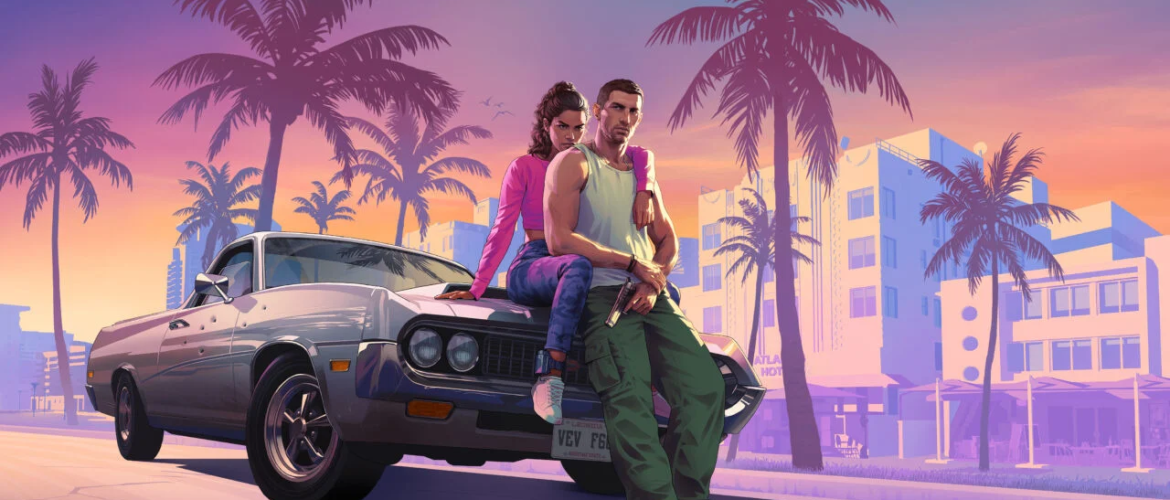
GTA 6 Wynwood: The Real Art District Behind Stockyard
Grand Theft Auto VI has brought its fictional Vice City into the real streets of Miami through a collaboration with Wynwood Walls. With ten commissioned murals, contributions from internationally recognised artists and complimentary museum admission for local residents, the partnership reveals a fascinating exchange between contemporary street art and one of gaming’s most influential cultural franchises.
The relationship between Miami and Grand Theft Auto has always been unusually close. Rockstar Games has spent decades drawing upon the city’s architecture, neighbourhoods and distinctive visual culture to create Vice City, its fictional interpretation of South Florida. With Grand Theft Auto VI approaching release on 19 November 2026, that relationship has moved beyond the screen and into one of Miami’s most celebrated creative districts.
Wynwood Walls, the outdoor museum that helped establish Wynwood as an international destination for street art, has collaborated with Rockstar on a series of original murals connected to the game. The project brings together artists from Miami and beyond, while the surrounding neighbourhood has provided inspiration for Stockyard, a district within the fictional world of GTA 6.
The collaboration is particularly significant because Wynwood is not simply a collection of colourful buildings. Over the past two decades, it has become an important centre for contemporary urban art, attracting internationally recognised muralists, galleries, collectors and cultural institutions.
Its influence has extended far beyond Miami, and its appearance within GTA 6 reflects the increasingly close relationship between street art, digital entertainment and contemporary visual culture.
For visitors, the partnership provides an unusual opportunity to experience the real artistic environment that helped inspire a fictional city, while discovering a neighbourhood whose creative identity is considerably more substantial than its appearance in a video game.
1. Rockstar Games and Wynwood Walls: Art Beyond the Screen
The collaboration between Rockstar Games and Wynwood Walls brings an established cultural institution into the promotional world of Grand Theft Auto VI.
According to the programme information supplied ahead of publication, ten original murals commissioned in connection with GTA 6 are being exhibited within Wynwood Walls and at locations throughout the surrounding neighbourhood.
The installations are scheduled to remain on view until 1 January 2027, creating a limited exhibition period that coincides with the game’s launch and the beginning of Miami’s winter cultural season.
The project is notable for its emphasis on original artwork rather than simply reproducing promotional imagery.
Participating artists have been invited to interpret the visual world surrounding GTA 6 through their own established practices, bringing individual approaches to colour, composition, typography and public art.
For Rockstar, the collaboration connects the fictional streets of Vice City with a real creative community whose work has influenced the appearance of contemporary Miami.
For Wynwood Walls, it introduces the museum and its artists to an audience that may be more familiar with digital entertainment than with the contemporary art market.
The result is an exchange between two different forms of visual storytelling, each capable of reaching audiences far beyond the physical location in which the work originates.
2. Free Wynwood Walls Admission for Miami-Dade Residents
One of the more distinctive elements of the partnership is the reported introduction of complimentary admission for Miami-Dade residents through 2028.
The arrangement allows eligible local residents to visit Wynwood Walls without paying the standard admission charge, subject to presentation of valid identification and the museum’s applicable entry conditions.
The initiative is particularly interesting because the commercial influence of a major entertainment release is being used to support access to a real cultural institution.
Wynwood has undergone substantial change since its emergence as an arts destination. As the neighbourhood’s reputation has grown, so too have its commercial activity, property values and visitor numbers.
The question of who can participate in the district’s cultural life is therefore an important one.
Providing complimentary admission to local residents creates an opportunity for people living within Miami-Dade County to engage with an institution whose international reputation has become closely associated with their city.
The reported arrangement extends beyond the temporary GTA 6 mural exhibition, giving it a potentially longer-lasting significance for the museum and its surrounding community.
Visitors should confirm current admission conditions and identification requirements directly with Wynwood Walls before travelling.
3. The Artists Behind the GTA 6 Wynwood Murals
The participating artists represent a wide range of approaches to contemporary street art, from figurative painting and graphic illustration to large-scale abstraction and politically informed visual commentary.
The reported roster includes Miami-based artists Atomik and Tatiana Suarez, alongside Askew One, Denial, FAILE, Gons and Audet, Lady Aiko, Queen Andrea, Ron English and Tristan Eaton.
The breadth of the group is important. Wynwood’s reputation was built not through a single artistic movement but through the coexistence of different traditions, techniques and cultural influences.
Some artists work primarily with spray paint and large-scale public murals. Others have established careers spanning galleries, limited-edition prints, sculpture and commercial collaborations.
Their involvement reflects the increasingly fluid boundaries between street art and the wider contemporary art world.
Atomik and Miami’s Street Art Identity
Atomik is closely associated with Miami’s graffiti culture, particularly through the distinctive orange character that has appeared across walls and public spaces.
The image has become one of the city’s most recognisable contemporary street art motifs, combining a playful visual identity with a history rooted in local graffiti practice.
Atomik’s work demonstrates how a relatively simple character can develop cultural significance through repetition, location and recognition.
Within the context of GTA 6, the involvement of an artist so closely identified with Miami gives the project a connection to the city’s actual street art history rather than merely its commercial image.
Tatiana Suarez and Figurative Mural Painting
Miami-born artist Tatiana Suarez is known for figurative work characterised by expressive female subjects, intricate decorative elements and a distinctive use of colour.
Her paintings frequently combine influences from illustration, folklore and contemporary visual culture, creating images that are both immediately accessible and richly detailed.
Suarez’s participation introduces a different artistic language to the collaboration, contrasting with the graphic lettering and character-based imagery associated with other forms of street art.
Her work also reflects the importance of individual artistic identity within a neighbourhood that has sometimes been represented primarily through its collective visual spectacle.
FAILE, Ron English and the International Street Art Scene
The participation of FAILE and Ron English connects the project with artists whose influence extends well beyond Miami.
FAILE, the Brooklyn-based artistic collaboration, has developed a recognisable visual language incorporating popular imagery, typography, advertising references and layered graphic compositions.
Its work frequently explores the relationship between commercial culture and visual identity, making the collaboration with a globally recognised entertainment franchise particularly relevant.
Ron English has similarly built a career around the reinterpretation of advertising, familiar characters and mass-media imagery. His approach, often associated with the term Popaganda, examines the relationship between popular culture, consumerism and the symbols through which societies communicate.
These artistic concerns have a natural relationship with Grand Theft Auto, a franchise whose fictional worlds have long used advertising, branding and exaggerated consumer behaviour as subjects of satire.
The involvement of internationally established artists also demonstrates how far street art has moved beyond its earlier association with unauthorised urban expression.
Today, leading practitioners participate in museum exhibitions, major commissions and international collecting markets, while continuing to draw upon the visual language of public space.
4. Stockyard: The Wynwood-Inspired District in GTA 6
Within GTA 6’s fictional state of Leonida, the district identified as Stockyard draws inspiration from Wynwood’s industrial architecture and its transformation into a centre for street art.
The connection is particularly appropriate given the neighbourhood’s history.
Before its emergence as a cultural destination, Wynwood was characterised by warehouses, manufacturing businesses and industrial properties. Its large walls and relatively utilitarian architecture later provided an expansive setting for murals and other forms of public artwork.
Those same architectural characteristics lend themselves naturally to the visual design of a fictional urban district.
The contrast between industrial buildings and elaborate murals creates an environment that is immediately recognisable, particularly when combined with the cafés, galleries and independent businesses that have become associated with contemporary Wynwood.
Research supplied for this article also indicates that more than 50 street artists were invited to contribute work associated with GTA 6’s fictional environment, although the full extent of those contributions and their precise locations within the finished game require independent confirmation.
The broader artistic relationship is nevertheless significant.
Rockstar’s depiction of a Wynwood-inspired district suggests an interest in representing the visual identity of contemporary Miami beyond the familiar Art Deco hotels, waterfront towers and palm-lined avenues.
Stockyard introduces another aspect of the city: one shaped by artists, industrial architecture and the changing cultural identity of urban neighbourhoods.
5. How Wynwood Became an International Art Destination
To understand why the collaboration matters, it is worth considering how Wynwood acquired its reputation.
The neighbourhood’s transformation accelerated in the early 2000s as artists, galleries and creative businesses began occupying former industrial spaces.
The availability of large buildings and relatively inexpensive premises made the area attractive to cultural organisations seeking space beyond Miami’s more established commercial districts.
A decisive development came in 2009, when developer Tony Goldman established Wynwood Walls.
Goldman had previously been involved in the revitalisation of urban neighbourhoods, including parts of New York’s SoHo and Miami Beach’s historic Art Deco district.
At Wynwood, his vision was to create an outdoor environment where large-scale murals could be presented as works of art rather than simply as decoration.
The project attracted internationally recognised artists and helped establish a destination that combined public art, tourism and commercial redevelopment.
Over time, the surrounding streets became part of the attraction. Murals appeared across warehouse façades, galleries opened nearby and restaurants and independent retailers contributed to the area’s growing reputation.
The transformation was not without complexity. As Wynwood became more fashionable, the commercial value of its property increased, raising familiar questions about the relationship between artistic activity and urban redevelopment.
Nevertheless, the neighbourhood’s influence on Miami’s cultural identity has been considerable.
It helped establish the city as a destination for contemporary street art and provided a recognisable visual environment that has since appeared in photography, advertising, fashion and digital media.
Its incorporation into GTA 6 represents another stage in that wider cultural influence.
6. Street Art, Collecting and the Luxury Market
The relationship between street art and luxury has changed substantially over the past two decades.
Works created in public spaces were once regarded as largely separate from the established art market. Today, prominent street artists exhibit internationally, collaborate with major brands and produce limited editions collected alongside more traditional contemporary art.
The distinction between gallery art and street art has become increasingly difficult to maintain.
Artists such as Banksy, Jean-Michel Basquiat and Keith Haring have played different but influential roles in shaping the market’s appreciation of urban visual culture, while contemporary practitioners continue to explore the relationship between public imagery and private ownership.
Wynwood occupies an interesting position within this development.
Its murals are experienced primarily in public or institutional settings, yet many of the artists associated with the district also produce works intended for galleries and collectors.
For luxury audiences, the attraction lies not simply in the visual impact of a mural but in understanding the artist’s practice, cultural significance and place within a broader creative movement.
The GTA 6 collaboration introduces another dimension.
An artwork commissioned in connection with a major video game may be encountered by audiences who would not ordinarily visit a contemporary art museum. Some may subsequently develop an interest in the artist’s wider body of work, exhibitions or collectible editions.
That does not automatically make gaming-related art commercially valuable, nor does it establish future demand among collectors.
It does, however, illustrate how contemporary culture increasingly moves between physical institutions, digital entertainment and the market for art and design.
7. The GTA 6 Wynwood Walls Capsule Collection
Alongside the mural programme, the collaboration reportedly includes a limited collection of merchandise available for pre-order through Wynwood Walls.
The range includes items such as T-shirts, caps and water bottles, bringing the visual identity of the project into products that can be purchased and retained beyond the exhibition.
Although these objects sit outside the conventional fine art market, their existence is relevant to the wider relationship between cultural institutions and entertainment brands.
Museum merchandise has evolved considerably from the traditional souvenir. Limited collections, artist-designed products and collaborations with fashion and entertainment companies have become increasingly common ways for institutions to extend their identities beyond the exhibition space.
The commercial appeal often rests on the relationship between an object and a particular cultural moment.
In the case of GTA 6, the collection connects one of the year’s most anticipated entertainment releases with an established Miami art institution.
For collectors interested in gaming memorabilia or contemporary visual culture, the provenance of officially authorised merchandise is particularly important.
Items sold through recognised institutional channels should be distinguished from independently produced products that merely reproduce game-related imagery.
Availability, pricing and fulfilment details should be checked directly with Wynwood Walls, particularly where items are offered as pre-orders or limited releases.
8. Visiting Wynwood: Beyond the GTA 6 Murals
For visitors travelling to Miami, the GTA 6 collaboration provides a timely reason to explore Wynwood, but the neighbourhood offers considerably more than a single exhibition.
Wynwood Walls remains the most recognisable starting point, particularly for those unfamiliar with the district’s artistic history.
Its curated mural environment offers an introduction to internationally established artists and the development of large-scale street art as an institutional art form.
The surrounding neighbourhood provides a different experience.
Warehouse façades, independent galleries, design businesses and changing public artworks create a district whose appearance is continually evolving.
Unlike a conventional museum, where works are generally protected within permanent galleries, street art exists in an environment subject to redevelopment, weather, changing ownership and new artistic interventions.
This impermanence is part of its character.
Visitors interested in contemporary art may also wish to explore the wider Miami cultural landscape, including the Miami Design District, the Institute of Contemporary Art, Miami, and Pérez Art Museum Miami.
Each offers a different perspective on the city’s relationship with art and design.
The Design District has become particularly important to Miami’s luxury identity, combining flagship fashion boutiques with architecture, public installations and contemporary design.
Pérez Art Museum Miami, overlooking Biscayne Bay, provides a more institutional perspective, with a collection and exhibition programme reflecting Miami’s position within the Americas.
Together, these destinations reveal a city whose cultural ambitions extend well beyond the familiar imagery of beaches and nightlife.
9. Why the Rockstar Collaboration Matters
The most interesting aspect of the Wynwood Walls partnership is the direction in which cultural influence is moving.
Rockstar originally drew upon Miami’s architecture, communities and visual identity to create Vice City. With GTA 6, that process has become more detailed, incorporating references to contemporary neighbourhoods and their artistic character.
Now the relationship has moved in the opposite direction.
A real Miami art institution is presenting work connected to the fictional world that the city helped inspire.
This exchange reflects a wider development in contemporary culture, where the distinction between digital entertainment and traditional artistic institutions is becoming less rigid.
Video games are no longer confined to a specialist audience. Their visual worlds influence fashion, music, design and popular imagery, while established artists increasingly work across physical and digital media.
The Wynwood collaboration is particularly appropriate because the district itself was transformed through the interaction of art, property, commerce and cultural attention.
Its participation in a major gaming release raises interesting questions about how artistic identity travels, how cultural institutions reach new audiences and how fictional environments can influence the perception of real places.
For Miami, the project also reinforces a relationship with Grand Theft Auto that has existed for more than twenty years.
Vice City may be fictional, but its visual identity remains deeply indebted to the real city, and Wynwood is now part of that story.
10. Experiencing the Real Art District Behind Stockyard
Those visiting Wynwood because of GTA 6 will encounter a neighbourhood whose creative history is considerably richer than any single digital representation.
The murals offer an immediate connection to the visual culture that inspired Stockyard, but the wider district rewards a more considered exploration.
Its industrial architecture tells the story of an earlier Miami, while its galleries and public artworks reflect the city’s transformation into an international cultural destination.
The presence of artists such as Atomik, Tatiana Suarez, FAILE and Ron English within the reported collaboration also offers an opportunity to discover practitioners whose work extends far beyond the game.
For visitors interested in collecting, design or contemporary culture, the surrounding institutions provide further context.
The experience is perhaps most rewarding when Wynwood is approached not simply as a place to photograph colourful walls, but as a neighbourhood shaped by artists whose work has contributed to Miami’s evolving identity.
That distinction matters because the appeal of the district is not limited to its appearance.
Its significance lies in the artistic communities, creative practices and cultural history that have made it recognisable enough to become part of the fictional world of Grand Theft Auto.
When Vice City Meets Contemporary Art
The collaboration between Rockstar Games and Wynwood Walls represents an unusual meeting of two cultural worlds.
One is a globally recognised entertainment franchise whose fictional cities have become familiar to millions. The other is a real Miami art institution whose reputation has been built through the work of artists operating across public space, galleries and contemporary visual culture.
Their connection is more substantial than a conventional promotional installation.
It reflects the extent to which video games now participate in wider conversations about art, design, place and cultural identity.
For Wynwood, the partnership introduces its artists and institutions to a new international audience. For GTA 6, it strengthens the relationship between Vice City and the real Miami, giving the fictional city a connection to the people and creative practices that have shaped its visual inspiration.
And for visitors, it offers an opportunity to discover something beyond the game itself: a neighbourhood whose artistic identity continues to evolve, regardless of the fictional world it helped inspire.
Exhibition details, participating artists and admission arrangements described in this article are based on the supplied programme research and should be confirmed directly with Wynwood Walls before visiting. LXRY is an independent publication and is not affiliated with Rockstar Games or Take-Two Interactive.
EXPLORE LXRY
_____________
From exceptional travel and private experiences to fine watches, fashion, interiors and specialist services, LXRY connects readers with a carefully selected network of luxury businesses.
Many of the hotels and specialists we write about are ones we have known and worked with over the past decade. If something here has caught your interest, tell us what you have in mind and we will point you in the right direction.
Enquire Now
LXRY: Men | Women | Travel | Lifestyle | Partner Network