
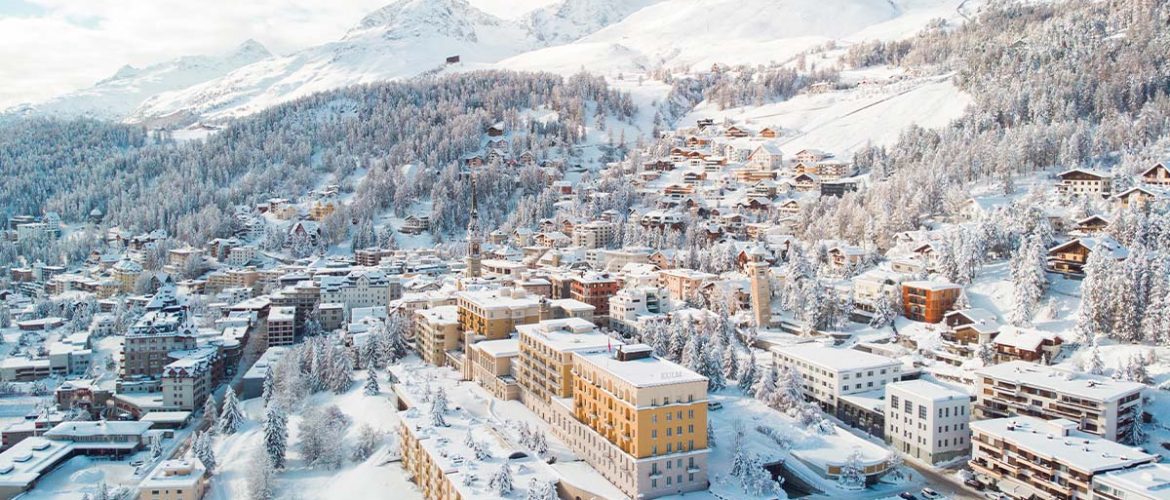
The Town That Built Alpine Luxury
There is a particular town in the Swiss Alps that has spent nearly two centuries refusing to become anything other than exactly what it has always been.
St Moritz did not become fashionable by accident. Royal families began introducing winter holidays here in the 1800s, at a time when the idea of travelling to the mountains specifically for cold weather, rather than fleeing it, was considered eccentric. The same families, or their direct descendants, continue arriving every winter, a tradition now well into its second century, largely unbroken.
The town has, in many respects, built the template that every other alpine luxury destination has since attempted to follow. Badrutt’s Palace is the hotel most directly responsible for that reputation, the property that effectively defined what Alpine luxury was meant to look like, and one that has had little reason to change the formula since.
What St Moritz offers that few destinations can genuinely claim is a sense of inherited ritual rather than constructed spectacle. The Snow Polo World Cup, played directly on the frozen surface of Lake St Moritz, has run for decades, drawing teams and spectators who treat it as a fixed point in the calendar rather than a novelty. Watching polo unfold on ice, in front of mountains that have not changed in the time anyone has been watching, is not an experience many other places can credibly offer.
The infrastructure reflects the same commitment to doing things properly rather than simply expensively. Even the cable cars connecting the resort’s various peaks have, at points, carried backing from major luxury houses, a detail that says less about marketing and more about how thoroughly this particular town has woven itself into the broader world of European luxury.
The après-ski culture that follows each day on the slopes carries the same theatrical confidence, terraces filled with champagne, fur, and a crowd that has clearly done this before, many times, in this exact place.
What makes St Moritz different from the destinations that have copied elements of its formula is simply time. Nearly two centuries of the same families returning, the same rituals repeating, the same standard being quietly maintained rather than periodically reinvented to chase a trend. It is, in the truest sense, a town built by tradition rather than by tourism, and it remains one of the very few places in the world where that distinction is still genuinely visible.