
The European Villages That Still Feel Like Another Era
Luxury travel often focuses on the world’s great hotels, restaurants and cities. Yet some of Europe’s most memorable destinations contain none of those things. What they offer instead is atmosphere. The sense of stepping into a place that has retained its character despite the passage of time, that exists on its own terms rather than in response to the people who visit it.
Europe’s villages hold more of this quality than its cities. The cities have adapted, expanded and in many cases been reshaped by the attention they receive. The villages, the best of them, have simply continued.
Hallstatt, Austria
Hallstatt has become one of the most photographed villages in the world, which might reasonably be expected to have diminished it. It has not. The combination of lake, mountain and architecture remains genuinely extraordinary, and visited outside the peak hours of a summer morning it retains a quality that the photographs, however numerous, have not quite captured. The setting is not a backdrop. It is the place itself.
Varenna, Italy
Lake Como attracts considerable attention, most of it directed toward Bellagio. Varenna, on the eastern shore, is the more considered choice. Quieter, less visited, and arguably more elegant in the way it sits at the water’s edge. The lakefront promenade and the gardens of Villa Monastero between them justify the journey independently of everything else the village offers.
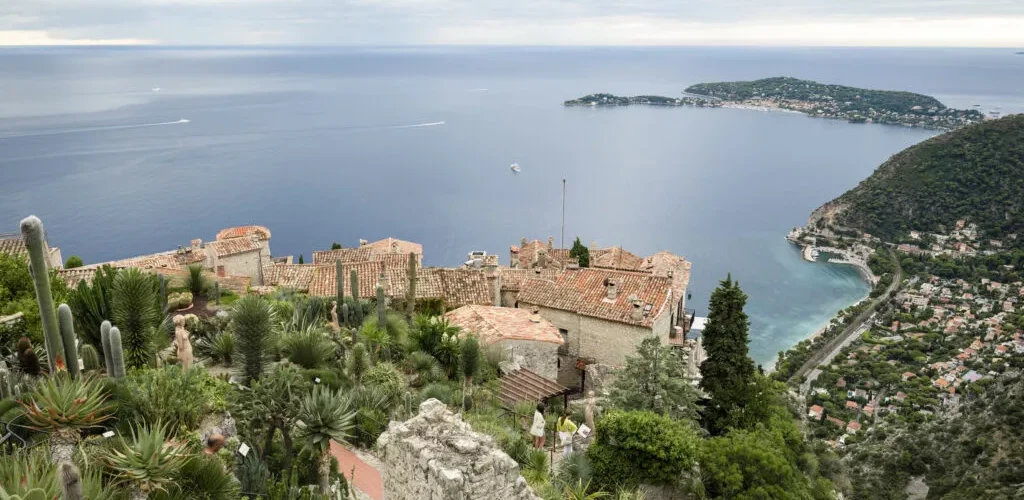
Èze, France
Èze sits on a rock above the Riviera at a height that makes Monaco, visible below, feel like a different world entirely. The medieval village has been inhabited continuously for centuries and the stone streets, the ramparts and the views across the Mediterranean carry that weight without announcing it. It is one of the few places on the Côte d’Azur where the landscape does more work than the lifestyle surrounding it.
Saint-Paul-de-Vence, France
Saint-Paul-de-Vence has been associated with artists, writers and creative figures for the better part of a century. Matisse, Chagall and Picasso all spent time here, and the galleries and foundation that remain reflect that history without reducing it to a tourist proposition. The village itself, the ramparts, the cobbled streets, the light in the afternoon, has changed remarkably little. It remains a place that rewards walking slowly.
Gordes, France
Gordes rises from the Luberon plateau in the kind of arrangement that suggests it was placed there deliberately. The pale stone buildings against the Provençal landscape have made it one of the most recognised villages in France, and it earns the recognition. The surrounding area, the lavender fields, the Sénanque Abbey visible from the approach road, adds a context that makes the village feel like part of something larger than itself.
Perast, Montenegro
The Bay of Kotor has begun to attract the attention that Dubrovnik’s overcrowding has redirected southward. Perast, a small Baroque town on the bay’s inner shore, offers what that attention has not yet complicated. Two small islands sit in the water directly in front of it, one natural and one built over centuries by sailors fulfilling a vow. The setting is among the most quietly remarkable in the Adriatic.
Giethoorn, Netherlands
Giethoorn has no roads. Movement through the village happens by boat, on foot, or by bicycle along the narrow paths beside the canals. The thatched farmhouses and the stillness of the water create an atmosphere that belongs to a different understanding of what a settlement can be. It is unusual in the most literal sense and remains so despite the visitors it attracts.
Alberobello, Italy
Alberobello’s trulli, the whitewashed stone buildings with their conical roofs, exist almost nowhere else in the world. The UNESCO protected area of the town contains hundreds of them, and the cumulative effect of the streetscape is genuinely unlike anything comparable in Europe. It is a place that makes an architectural argument for distinctiveness that has survived centuries of change around it.
Riomaggiore, Italy
The five villages of the Cinque Terre occupy one of the most dramatic stretches of the Italian Riviera, and Riomaggiore, at the southern end, retains the most authentic character of them. The coloured buildings stacked above the small harbour, the walking paths connecting it to its neighbours, and the relationship between the village and the sea feel less managed than elsewhere along the coast. It is the Cinque Terre before the Cinque Terre became entirely about itself.
The appeal of these villages is not that they are undiscovered. Most are not. It is that despite being discovered, photographed and shared for decades, they still retain the qualities that made them remarkable in the first place. That kind of resilience, the ability to remain genuinely themselves under sustained attention, is rarer than it should be and worth travelling for when it exists.