
The Luxury Experiences Not Worth What They Cost
Not everything expensive is worth the price. A few observations from the sharp end of luxury travel and hospitality.
Luxury has a pricing problem.
Not in the sense that things cost too much — at the level most readers of this journal operate, price is rarely the primary consideration. The problem is something more specific. Certain experiences have become expensive without becoming better. The gap between what is charged and what is delivered has widened quietly, and the people who notice it most are the ones who have been paying for long enough to remember when the gap did not exist.
These are five of them.
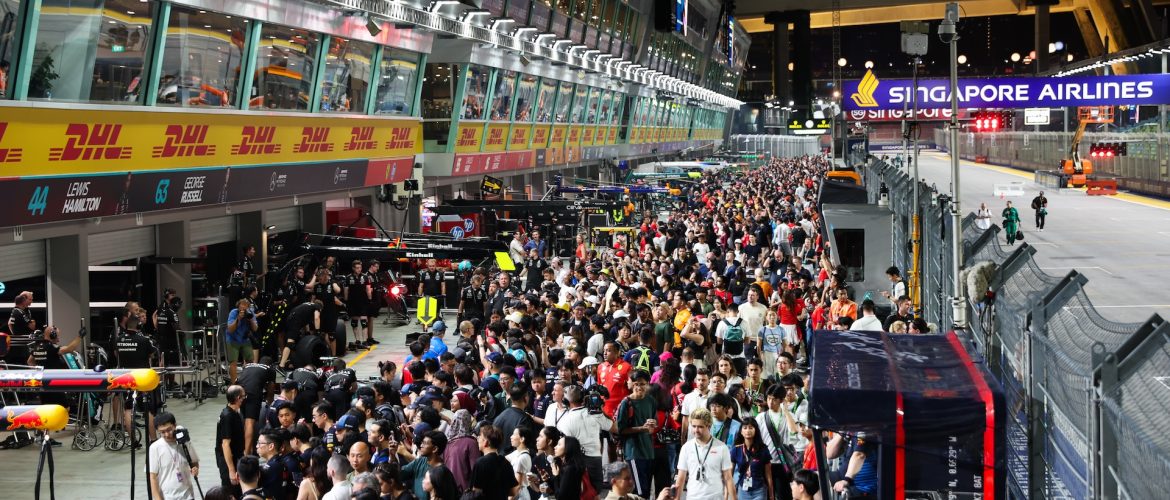
Singapore Grand Prix Paddock Club When premium becomes a volume product.
The Singapore Grand Prix remains one of the finest events on the Formula One calendar. The night race, the city backdrop, the atmosphere generated by a street circuit under lights — none of that is in question.
The Paddock Club is a different conversation.
What was once a genuinely exclusive hospitality product has become, at many races and Singapore in particular, a large-scale catering operation with pit lane access. Thousands of guests. A pit lane walk that moves at the pace of a school trip. Hospitality areas that, on a busy day, feel closer to a corporate conference than a premium sporting experience.
The product is not bad. It is simply not what the price suggests. At this level, the difference between a hospitality experience that feels exclusive and one that merely costs a lot is the number of other people having it at the same time. The Paddock Club has been sold to too many people to feel like either.
The race deserves a better frame. Private suite access or a trackside terrace with a controlled guest list is the version worth pursuing. The Paddock Club, at its current scale, is the version worth reconsidering.
Luxury Hotel Dynamic Pricing The algorithm that forgot what hospitality means.
A suite at a well-known property. Monday night in October, the rate is £3,500. The same suite, the same floor, the same view, on a Thursday in December costs £9,000. Nothing has changed except the occupancy data feeding a pricing algorithm that treats a long-standing guest with the same indifference it applies to a first-time visitor who found the hotel through a search engine.
Dynamic pricing has become standard practice across the luxury hotel market and it has done something the industry has not fully acknowledged. It has converted a relationship into a transaction.
The guest who has stayed at a property a dozen times and considers it a second home does not expect to pay the same rate as peak demand commands. They expect to be recognised. Dynamic pricing, at its most aggressive, does the opposite — it charges the most to the guests most likely to pay it, regardless of history, loyalty or relationship.
The hotels that have understood this are the ones that maintain rate integrity across the year and reward long-term guests accordingly. The ones that have not are the ones where a regular guest discovers, in conversation over dinner, that the person at the next table paid significantly less for the same room on the same night.
That conversation ends relationships.
Monaco Grand Prix Accommodation The most glamorous traffic problem in the world.
Monaco during Grand Prix weekend is genuinely extraordinary. The harbour, the circuit, the social programme, the evenings. The full picture has been covered elsewhere in this journal and the case for being there properly has been made.
The accommodation situation deserves its own honest assessment.
The principality is small. The circuit occupies much of it. During race weekend, Monaco effectively closes to normal movement. The hotels within the circuit — the Fairmont above the Hairpin, Hotel de Paris at Casino Square — are the positions worth being in and are, in almost every case, held by guests who have occupied them for years and show no intention of releasing them.
What remains available for guests arriving without that history is accommodation outside the principality. Nice, Cannes, Antibes. Perfectly reasonable bases for a different kind of trip. For the Monaco Grand Prix, they mean commuting daily into a principality that does not scale gracefully under pressure, on roads that do not move gracefully under pressure, to attend an event whose appeal is partly defined by being inside it rather than arriving at it.
The experience of spending forty-five minutes in traffic to reach a circuit you can see from your hotel window in Nice is not the Monaco Grand Prix experience. It is the Monaco Grand Prix logistics experience, which is a considerably less glamorous thing.
The lesson is not that Monaco should be avoided. It is that Monaco without the right accommodation is a different event entirely.
Mykonos in August When the destination becomes the crowd.
Mykonos has always been beautiful. The whitewashed architecture, the light, the Aegean. None of that has changed and none of it is in question.
What has changed is August.
The island in peak summer now operates at a scale that has little relationship to the experience that built its reputation. The beach clubs that made Mykonos famous as a destination for discerning travellers have become large-scale entertainment venues operating at capacity from midday to midnight. The narrow streets of Mykonos Town that were once genuinely charming are now genuinely difficult to move through. The restaurants require reservations made months in advance for tables that, by the time you sit down, feel less like a discovery and more like a transaction.
The island has not declined. It has been consumed by its own success and the consumption is most visible in August when every flight from every major European city deposits another cohort of guests who have all seen the same images and want the same experience.
The version of Mykonos worth finding still exists. It exists in September, when the temperature remains excellent and the crowd has thinned to something the island can actually absorb. It exists in the quieter beaches on the northern coast that the beach club circuit has not reached. It exists in the morning before the yachts have woken up.
August is not that version.
VIP Festival Tickets A slightly more expensive field is still a field.
The premium festival experience has become one of the most effectively marketed products in luxury hospitality. The names change — the Rose Garden, the Platinum Experience, the Inner Circle — but the proposition is broadly consistent. Pay significantly more than a standard ticket and receive a slightly elevated version of the same event.
What elevated means in practice varies. Sometimes it means a covered viewing area with a better sightline. Sometimes it means a dedicated bar where the queue is shorter than the general queue but exists nonetheless. Sometimes it means a hospitality package that includes food and drink at prices that would be unremarkable in a decent restaurant but feel significant against the festival backdrop.
What it rarely means is exclusivity. The premium areas at major festivals hold hundreds of guests. The sight lines, while better than the general field, are still sight lines from a field. The infrastructure, however well designed, is temporary. The experience is defined by the artist performing, not by the hospitality surrounding it.
This is not an argument against attending festivals. It is an observation that the premium ticket at most major festivals purchases comfort rather than access. For a client accustomed to genuine exclusivity, the distinction matters.
The version of a festival worth attending at this level is a private event, a curated gathering, or a genuinely small-scale cultural experience where the guest list is controlled rather than tiered. The version that costs five times the standard ticket and delivers a wider seat is the version worth reconsidering.
The Real Luxury
Space. Time. Simplicity.
The best luxury experiences rarely feel crowded. They rarely feel rushed. They rarely require explaining why they are special.
The moment an experience starts prioritising volume over quality, it begins moving away from luxury and towards entertainment. The two are not the same thing and the price does not determine which one you are paying for.
The experiences worth seeking are the ones where the guest list is small, the access is genuine, the service remembers your name without being told it, and nobody is counting how many other people are having the same thing at the same time.
That standard exists. It is simply less common than the price of the alternative suggests.