
The Access Nobody Advertises
The most sought-after seats, suites and invitations in the world do not appear on any platform. This is how access at this level actually works.
There is a tier of access that does not have a website.
No booking page. No public waitlist. No price visible until the conversation is already underway. The Champions League final suite that went for €150,000. The Wimbledon Debenture that doubled in price between January and April. The Cannes Film Festival invitation that was never available to the public because it was never intended to be. The Formula One hospitality package that sold out before the season calendar was confirmed.
This access exists. It moves quietly and it moves early. The people who have it rarely discuss how they got it.
The events that define the calendar
Certain events sit above the rest. Not because the sport or the culture is superior but because the demand is finite and the supply is not flexible. You cannot add another row to the Wimbledon Centre Court. You cannot create a new berth in Port Hercules. Ferrari does not add more seats to their Singapore Grand Prix hospitality because a client asks nicely. When the allocation is gone, it is gone, and no relationship changes that.
The Champions League final in Paris this season illustrated the point with unusual clarity. Standard VIP tickets opened at €1,500. Suite access at the top end reached €150,000. Between those two numbers sat every variation of hospitality the market could produce, and every level sold. The clients who moved early paid the market rate. The clients who waited paid considerably more, or did not attend.
Wimbledon Debenture seats follow a similar pattern. Prices that look significant in January look reasonable by June when the alternative is the secondary market at twice the cost. The clients who treat Wimbledon as an annual arrangement rather than an annual decision are the ones who arrive at the price they expected.
Formula One — the suite problem
Hospitality in Formula One is one of the most misunderstood markets in premium sport.
Each team controls a finite number of suite places per race. Ferrari, Mercedes, Red Bull — the allocations are fixed. When a client enquires about Paddock Club or team suite access for a race they want to attend, the answer depends almost entirely on when they are asking. Early in the season, options exist. Closer to the race, the options narrow. At the race itself, the options are whatever the secondary market will bear, which is always more than anyone wanted to pay.
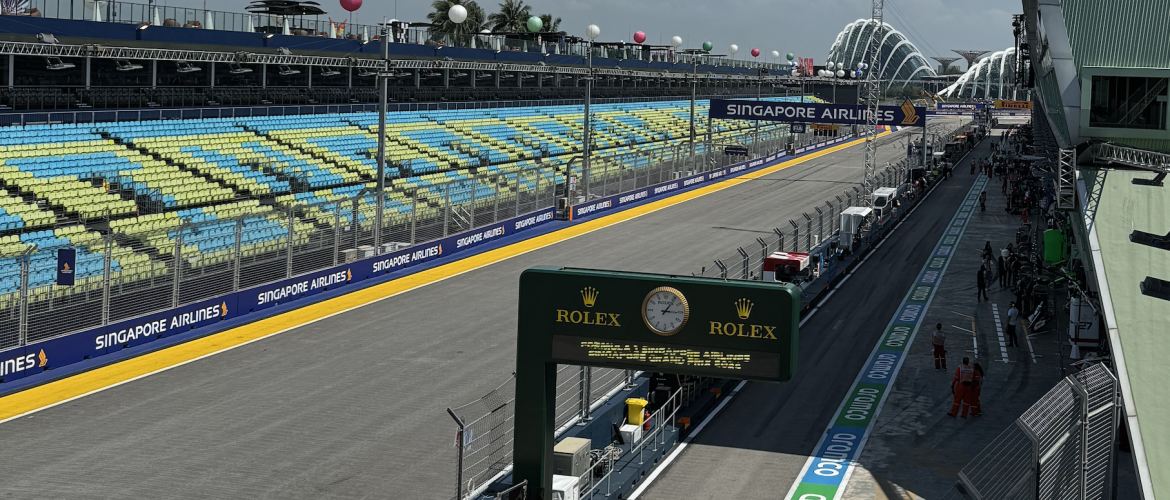
The Singapore Grand Prix. Monaco. Abu Dhabi. Silverstone. These are not races where last-minute arrangements are a realistic strategy. They are races where the arrangement was made months ago by someone who understood that.
Cannes. The premieres. The shows.
The Cannes Film Festival red carpet is one of the most visible events in the world and one of the least accessible. What appears on screen, the arrivals, the premieres, the terraces — represents a fraction of what the festival actually is for the people inside it. Private screenings, invitation-only dinners, yacht events that do not appear on any programme. The access that matters at Cannes is not ticketed. It is arranged.
Paris Fashion Week. Milan. The shows that define the season are not open to anyone with a preference for front row. The invitations are controlled, the lists are curated and the access reflects relationships rather than requests. For clients who want to be in the room, the conversation about how that happens is not one that begins with a Google search.
Movie premieres in London, New York and Los Angeles operate the same way. The red carpet is visible. The access to it is not.
Not all access is publicised
Some of the most sought-after seats, tables and invitations in the world never appear on any platform. Entry, on occasion, comes through channels that are entirely legitimate and entirely invisible to everyone outside them.
This is not a grey market. It is simply a layer of access that exists for people who know where to look and who to speak to. The infrastructure is real. The relationships are established. The access is genuine.
It is just not something that gets discussed publicly very often.
The cost of leaving it late
This is the conversation worth having before it becomes relevant rather than after.
Scarcity in premium event access is structural, not artificial. There are a fixed number of seats in a Champions League final suite. A fixed number of Debenture holders at Wimbledon. A fixed number of team hospitality places at each Formula One race. When those allocations are filled, the only remaining option is a supplier who knows the market is tight and prices accordingly. That additional cost is real, it is significant, and it is entirely avoidable.
The clients who experience it are almost always the ones who assumed they could sort it closer to the time. At this level, closer to the time is when the price doubles and the availability disappears.
The request that cannot wait is not an edge case. It is most of the calendar.